Dead Sea Salt vs Epsom Salt: What’s the Difference and Which Is Better for Your Skin?
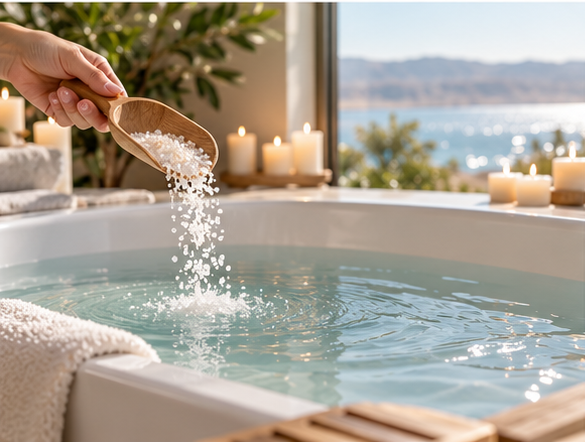
There's something deeply satisfying about pouring a handful of bath salts into warm water. The crystals disappear, the bathroom fills with steam and, for the next twenty minutes, the world can wait. But take a closer look at the bath-salt aisle, and you'll notice something curious. Dead Sea salt and Epsom salt are often presented as though they're interchangeable. Both promise relaxation. Both are associated with magnesium. Both have developed something of a reputation for transforming an ordinary bath into a wellness ritual.

So why does one come from one of the world's most unusual bodies of water, while the other is named after a town in England? And more importantly, does your skin actually know the difference?
As it turns out, yes. At least chemically.
Dead Sea salt and Epsom salt are not the same thing. Their mineral compositions are quite different, and that distinction matters when you're choosing a bath soak for dry skin, sensitive skin or simply an enjoyable evening of doing absolutely nothing. The interesting part is separating what the minerals can genuinely do from everything we've been encouraged to believe about them.
First, What Exactly Is Dead Sea Salt?
The Dead Sea is extraordinary even before you get to the skincare. Situated between Jordan and Israel and the West Bank, it's famous for its intensely saline water, dramatic mineral formations and the rather surreal experience of floating almost effortlessly on its surface. But what makes Dead Sea salt particularly interesting isn't simply how salty it is. It's what kind of salt it contains.
Ordinary sea salt is composed predominantly of sodium chloride—the same basic compound found in table salt. Dead Sea salts, by contrast, have a distinctive mineral profile, with significant amounts of magnesium, calcium and potassium salts, along with sodium and bromide compounds.
That unusual composition is why Dead Sea minerals have become such a familiar ingredient in skincare. You'll find them in everything from bath salts and body scrubs to mud masks, moisturisers and specialised body treatments.

For centuries, people have associated bathing in the Dead Sea with skin comfort and wellbeing. Modern research has begun examining some of those traditions, particularly the relationship between magnesium-rich salt solutions, skin hydration and the skin barrier. And that's where the conversation becomes considerably more interesting than the usual promises of a luxurious bath.
And What Is Epsom Salt?
Despite its name, Epsom salt isn't actually sea salt. It's magnesium sulphate, a compound made from magnesium, sulphur and oxygen. Its name comes from Epsom in Surrey, England, where naturally occurring mineral waters helped establish its reputation. Epsom salt has become a bathroom staple, particularly among people who enjoy a warm soak after exercise, a long day at work or an especially ambitious weekend in the garden. It's inexpensive, widely available and easy to use.
And because it contains magnesium, it's frequently marketed as a way to relax muscles, replenish magnesium levels and soothe aching bodies. There is, however, an important distinction between containing magnesium and delivering magnesium into the body. The idea that soaking in Epsom salt significantly increases magnesium levels through the skin is not supported by convincing clinical evidence. That doesn't mean an Epsom salt bath can't feel wonderful.
Warm water alone can be relaxing, and a quiet soak may help you feel more comfortable after a physically demanding day. But it's worth giving the bath credit for what it actually does, rather than assuming every pleasant sensation comes from magnesium being absorbed through the skin.
Dead Sea Salt vs Epsom Salt: The Difference Is in the Minerals
At first glance, the two can look remarkably similar. Pale crystals, a scoop, a warm bath. You could easily mistake one for the other. Chemically, though, they're quite different.
Epsom salt is essentially one mineral compound: magnesium sulphate.
Dead Sea bath salt is a naturally occurring mixture of mineral salts. Its composition varies according to how it's harvested and processed, but magnesium chloride and other chloride salts are important components.
That means a Dead Sea salt bath exposes the skin to a more varied mineral solution than a bath containing pure Epsom salt.
Does that automatically make Dead Sea salt better? Yes, if your interest is specifically in skin hydration and barrier function, magnesium-rich Dead Sea salt has some intriguing research behind it. And unlike many skincare claims, this is worth looking at more closely.
Can Dead Sea Salt Actually Help Dry Skin?
Dry skin is rarely just about not drinking enough water. The outermost layer of our skin acts as a protective barrier, helping retain moisture while limiting exposure to environmental irritants. When that barrier isn't functioning particularly well, water escapes more readily and skin can become rough, tight, flaky or uncomfortable. It's a familiar problem, especially during colder months, after long hot showers or when skin is exposed to air conditioning and indoor heating. This is where Dead Sea salt becomes interesting.

A study published in the International Journal of Dermatology in 2005 examined the effects of bathing in a magnesium-rich Dead Sea salt solution among volunteers with atopic dry skin. Researchers compared skin exposed to the salt solution with skin exposed to ordinary tap water. They found improvements in hydration, roughness and redness, along with better barrier-function measurements in participants who began with elevated water loss through the skin.
The researchers suggested that the magnesium-rich composition of the salt solution was likely to have contributed to these effects. That's encouraging, particularly for anyone interested in mineral bathing as part of a dry-skin routine.
Is Epsom Salt Good for Your Skin?
Epsom salt is often described as soothing, softening and detoxifying. The first two are difficult to separate from the effects of the bath itself. Warm water can temporarily soften the skin's surface, and the simple act of soaking can feel wonderfully relaxing. But there is much less direct clinical evidence demonstrating that Epsom salt baths improve skin hydration or barrier function in the same way observed in the specific Dead Sea salt study.
That doesn't make Epsom salt harmful or pointless. It simply means we should be careful about assigning benefits to the magnesium sulphate when those effects haven't been convincingly demonstrated. If your skin is generally healthy and you enjoy an occasional Epsom salt bath, there's no obvious reason to abandon the ritual.
If, however, you're choosing bath salts specifically because your skin is persistently dry, the research on magnesium-rich Dead Sea salt solutions gives you a more relevant starting point.
Neither product replaces a good moisturiser, and both can cause discomfort if your skin is cracked, irritated or unusually sensitive. Which brings us to the question many people really want answered.
Which Is Better for Dry or Sensitive Skin?
If you're choosing between Dead Sea salt and Epsom salt for dry skin, Dead Sea salt has the stronger skin-specific research, although the evidence remains limited. Its mineral composition has been studied in relation to hydration, roughness and barrier function, rather than simply being associated with relaxation.
But sensitive skin deserves a more individual approach. Some people find mineral baths comfortable and enjoyable. Others notice stinging, particularly when their skin is inflamed, scratched or cracked. A highly concentrated salt bath isn't automatically gentler because the minerals are natural. In fact, the concentration of the salt solution, water temperature, bathing time and condition of your skin can all influence how comfortable the experience feels.
If your skin is sensitive, start cautiously and follow the directions on the product. Avoid using salts on broken or actively irritated skin unless your healthcare professional has advised otherwise. And don't forget the moisturiser afterwards. A bath may be part of your skincare routine, but the cream you apply after drying off often makes a considerable difference to how your skin feels for the rest of the day.
What About Eczema and Psoriasis?
The Dead Sea has a long association with people seeking relief from chronic skin conditions, particularly psoriasis. Dead Sea climatotherapy has historically combined several environmental factors, including mineral-rich water, sunlight and the region's unusual climate. It's difficult to attribute the results of those programmes to salt alone. Research on magnesium-rich Dead Sea bathing is relevant to skin hydration and certain barrier measurements.
For people living with these conditions, skincare is highly individual. A mineral bath that feels comfortable during a calm period may sting badly during a flare-up. If you have eczema, psoriasis, dermatitis or another persistent skin condition, it's sensible to discuss mineral bathing with your dermatologist or healthcare professional, particularly if your skin is broken or inflamed.
And keep using any prescribed treatments as directed. Skincare rituals can be enjoyable additions to everyday care. They shouldn't be mistaken for medical treatment.
Are Dead Sea Salt Baths Better for Sore Muscles?
This is where both Dead Sea salt and Epsom salt have acquired reputations that run somewhat ahead of the science. Epsom salt is particularly famous for post-exercise baths. Dead Sea salt is also frequently associated with easing physical tension and encouraging relaxation. There's certainly something appealing about lowering yourself into a warm bath after a long walk, an intense workout or a day spent standing. Warm water can help you feel relaxed and temporarily ease the sensation of stiffness. But claims that magnesium from either type of bath salt is absorbed through the skin in sufficient quantities to correct magnesium deficiency or produce significant muscle-recovery benefits remain unproven.

So which should you choose? For relaxation alone, personal preference may matter more than mineral composition. For skin-focused bathing, Dead Sea salt has a more distinctive mineral profile and some relevant clinical findings. You don't have to turn every bath into a scientific experiment. Sometimes the pleasure of the ritual is reason enough.
How to Use Dead Sea Bath Salts Without Drying Out Your Skin
Here's the slightly ironic thing about bathing for dry skin: spending too long in hot water can leave your skin feeling drier afterwards. It doesn't matter how luxurious the bath salts are if the water is almost boiling and you've been soaking for the better part of an hour. The simplest approach is usually the most sensible.
Choose comfortably warm water rather than very hot water. Follow the manufacturer's instructions for the amount of salt to use, and start with a shorter soak if your skin tends to be sensitive. Around 10–15 minutes is a reasonable starting point for many people, although product instructions and individual tolerance should guide you. Once you're finished, rinse if recommended, pat your skin dry and apply a moisturiser while the skin is still slightly damp.
That final step is worth taking seriously. A nourishing body cream or body oil can help soften the skin and reduce moisture loss after bathing. And if you find that mineral baths consistently leave your skin stinging, itchy or unusually tight, don't force the ritual. Your skin is giving you useful feedback.
The Dead Sea Bath Ritual: What to Look for at Jericho Skincare
One of the pleasures of Dead Sea skincare is that it lends itself so naturally to a complete body-care ritual. At Jericho Skincare Australia, you'll find mineral-rich bath products alongside body scrubs, oils and moisturisers from Dead Sea skincare ranges including Sea of Spa's Bio Spa and Juman Dead Sea.
If you're new to mineral bathing, Juman Dead Sea Bath Salt 250g is a straightforward place to begin. Made with natural Dead Sea salts, it's designed for a traditional mineral bath without unnecessary complications.
For those who enjoy keeping a larger supply on hand, Bio Spa Dead Sea Salt Crystals 1000g offer another option within the bath and body collection.
The ritual doesn't have to end when you step out of the bath, either. Bio Spa body butters and body oils make a natural follow-up, particularly when your skin feels dry after bathing. The range includes nourishing body-care textures and botanical ingredients designed to leave skin feeling softer and more comfortable.
And if you're drawn to the idea of smoother skin rather than simply soaking, Dead Sea salt body scrubs offer a different experience altogether. But there's an important distinction between the two.
Dead Sea Salt Baths and Salt Scrubs Aren't the Same Thing
A bath salt dissolves in water, creating a mineral-rich solution in which the skin is immersed. A salt scrub works differently. The crystals are used as a physical exfoliant, helping loosen and remove surface dead skin cells through gentle massage. The surrounding oils and other ingredients then influence how the skin feels afterwards. This is why a Dead Sea salt scrub can leave skin feeling remarkably smooth, even though its main cosmetic action is different from soaking in dissolved salts.
At Jericho Skincare, the Bio Spa Dead Sea Salt Body Scrubs combine salt crystals with aromatic oils and are available in fragrances including vanilla, jasmine, lavender and lemongrass. They're a lovely option when the goal is softer-feeling skin on areas such as the arms and legs. Just remember that exfoliation and hydration aren't interchangeable.
 If your skin is already dry, flaky or irritated, scrubbing more vigorously is unlikely to improve matters. Over-exfoliation can make the problem worse. Use a scrub gently, avoid broken or inflamed skin and finish with a suitable moisturiser. And if you're choosing between a salt bath and a scrub for sensitive skin, a scrub isn't automatically the gentler option. Sometimes the most luxurious thing you can do for your skin is leave it alone.
Can You Mix Dead Sea Salt and Epsom Salt Together?
You can combine the two in a bath, provided the products are intended for bathing and you follow their directions. But mixing them doesn't necessarily create a superior treatment.
Dead Sea salt already contains magnesium salts, while Epsom salt contributes magnesium sulphate. Combining them changes the overall mineral composition of the water, but there isn't good clinical evidence that a homemade mixture provides better skin benefits than using either one appropriately.
There's also no need to increase the total amount of salt simply because you're using two types. More isn't automatically better, especially for sensitive skin. If you're interested in the skin-specific research associated with magnesium-rich Dead Sea salt solutions, using a straightforward Dead Sea bath salt product makes it easier to understand what you're actually bathing in. If you simply enjoy experimenting with bath rituals, keep the concentration moderate and pay attention to how your skin responds.
Dead Sea Salt vs Epsom Salt: Which Should You Choose?
It really depends on why you're running the bath.
If you're looking for an inexpensive addition to a relaxing soak, Epsom salt is a perfectly reasonable choice. Its popularity is understandable, even if some of its more ambitious magnesium-absorption claims remain unproven.
If you're interested in mineral-rich bathing for dry skin, Dead Sea salt is the more compelling option. Its varied mineral composition and the research on certain magnesium-rich Dead Sea salt solutions give it a stronger skin-focused story.
If you have very sensitive or reactive skin, neither is automatically ideal. Your skin's condition and tolerance matter more than the reputation of the salt. And if your main concern is rough skin texture, you may be looking for a body exfoliator rather than a bath salt in the first place. The smartest choice is the one that matches what you actually want from the product. Not the one making the longest list of promises.
Frequently Asked Questions
Is Dead Sea salt the same as Epsom salt?
No. Dead Sea salt is a natural mixture of mineral salts, including magnesium, calcium and potassium compounds. Epsom salt is magnesium sulphate, a specific chemical compound. They have different mineral compositions and shouldn't be considered interchangeable.
Which is better for your skin, Dead Sea salt or Epsom salt?
For skin hydration and barrier support, magnesium-rich Dead Sea salt has more directly relevant clinical research. Epsom salt can still be an enjoyable bath addition, but evidence for its specific skin benefits is more limited.
Does Dead Sea salt contain magnesium?
Yes. Magnesium salts are an important part of the Dead Sea's distinctive mineral composition, alongside calcium, potassium, sodium and other dissolved minerals.
Is Dead Sea salt good for dry skin?
Research on certain magnesium-rich Dead Sea salt bathing solutions has found improvements in skin hydration and barrier measurements. Results depend on the product, concentration and individual skin condition, and bathing should be followed by suitable moisturising care.
Can I use Dead Sea salt if I have sensitive skin?
Some people with sensitive skin tolerate mineral baths well, while others experience stinging or irritation. Avoid using salts on broken or actively inflamed skin unless advised by a healthcare professional, and start cautiously.
Can Dead Sea salt help eczema or psoriasis?
Some research has examined Dead Sea bathing and related treatments in people with dry or inflammatory skin conditions. However, cosmetic Dead Sea bath salts aren't established cures or substitutes for prescribed eczema or psoriasis treatments.
Is Epsom salt good for sore muscles?
A warm Epsom salt bath may feel relaxing after physical activity, but convincing evidence that magnesium is absorbed through the skin in amounts sufficient to improve muscle recovery is lacking.
Can your body absorb magnesium from Epsom salt baths?
There isn't convincing clinical evidence that ordinary Epsom salt baths significantly increase the body's magnesium levels. Magnesium deficiency should be assessed and managed through appropriate medical and nutritional advice.
Do Dead Sea salts remove toxins from the body?
There is no convincing evidence that Dead Sea salt baths draw toxins out of the bloodstream. The body's liver and kidneys perform essential waste-processing functions. Mineral bathing is better understood as a skin-care and relaxation ritual.
How long should you soak in a Dead Sea salt bath?
Follow the directions on the product. A short soak of around 10–15 minutes is a sensible starting point, particularly for dry or sensitive skin. Avoid excessively hot water and moisturise afterwards.
Can I use Dead Sea bath salts every day?
Frequency depends on your skin's tolerance, the salt concentration and the product directions. Daily mineral baths aren't necessary for everyone, and frequent bathing may worsen dryness in some people.
Can you mix Dead Sea salt with Epsom salt?
Yes, but there is no good evidence that combining them produces superior skincare benefits. Keep the overall concentration reasonable and follow product instructions.
What's the difference between Dead Sea bath salt and a Dead Sea salt body scrub?
Bath salts dissolve in water to create a mineral-rich soaking solution. Body scrubs use salt crystals for physical exfoliation, often alongside oils and other conditioning ingredients.
Where can I buy Dead Sea bath salts in Australia?
Jericho Skincare Australia offers a selection of Dead Sea bath salts and mineral-rich body-care products, including Juman Dead Sea Bath Salt and Bio Spa Dead Sea Salt Crystals, with shopping options for Australia and New Zealand.
The Best Bath Salt Is the One That Makes Sense for Your Skin
For all the claims surrounding bath salts, the real difference between Dead Sea salt and Epsom salt is refreshingly uncomplicated. They're different substances.
Epsom salt is magnesium sulphate. Dead Sea salt is a naturally mineral-rich mixture with a distinctive composition and some encouraging research relating to skin hydration and barrier function. If your goal is caring for dry skin, rather than just enjoying a warm soak, Dead Sea salt has a more relevant scientific story. And perhaps the nicest thing about mineral bathing is how uncomplicated it can be.
A comfortably warm bath. A sensible amount of salt. Fifteen quiet minutes. A nourishing body cream afterwards. No elaborate routine. No exaggerated promises.
Just a little more attention to skin that deserves to feel comfortable.
Explore the Dead Sea Bath Salts & Body Oils collection at Jericho Skincare Australia, where mineral-rich bathing meets everyday body care.
-
Posted in
Dead Sea minerals, Dead Sea Salt