Face Masks for Every Skin Type: Mud, Mineral, Hydrating & Anti-Ageing Masks Explained
Face masks occupy a slightly unusual place in skincare. They’re not quite essential, yet somehow they’re often the products we enjoy using most.
There’s the ritual of it. Clean face, hair out of the way, mask on, ten quiet minutes in which nobody should reasonably expect anything from you.

A rich hydrating mask that leaves dry skin beautifully soft may feel far too heavy on an oily complexion. A Dead Sea mud mask that makes congested skin feel wonderfully clean could leave very dry skin wondering what it did to deserve such treatment. And an expensive anti-ageing mask isn’t automatically the best choice simply because you’ve reached a certain age. Finding the best face mask for your skin type starts with a much less glamorous question: what does your skin need today?
Sometimes it needs hydration. Sometimes a deeper cleanse. Sometimes it feels dull and rough. Sometimes it has had quite enough skincare for one week and would benefit from something soothing rather than another ambitious active. That’s why there really isn’t one “best” face mask. There are different masks for different skin—and different moments.
What Does a Face Mask Actually Do?
A face mask is essentially a concentrated skincare treatment designed to stay on the skin for a set period before being removed, rinsed away or, in the case of some overnight masks, left on. What happens during those ten or fifteen minutes depends entirely on the formula.
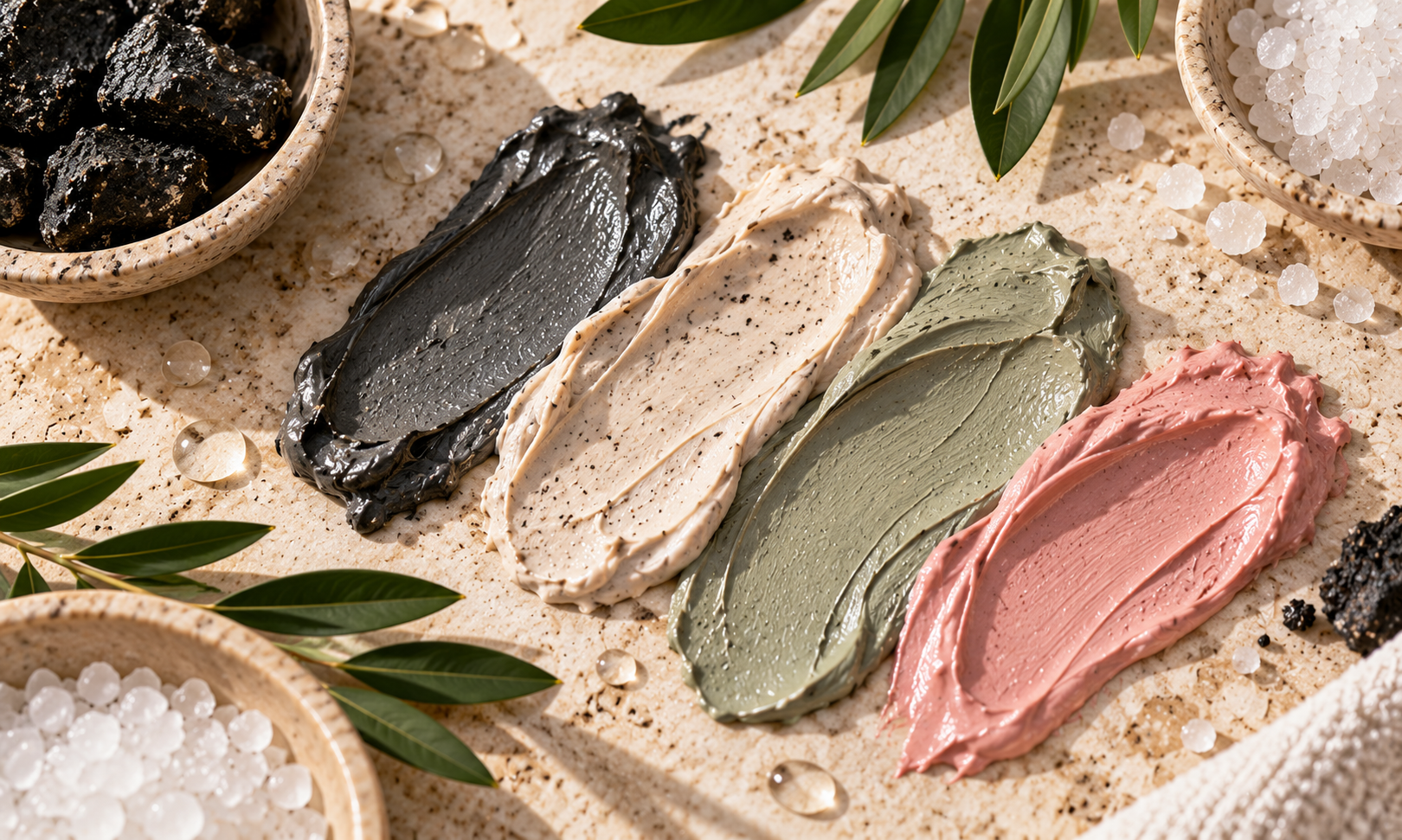
A mud or clay mask is generally designed to absorb excess surface oil and help lift away impurities. A hydrating mask focuses on increasing moisture and reducing that dry, tight feeling. A mineral mask may combine ingredients such as Dead Sea mud or minerals with moisturising and skin-conditioning ingredients.
An anti-ageing face mask might contain peptides, antioxidants, botanical oils, hyaluronic acid or other ingredients aimed at making skin look smoother, plumper and more refreshed.

Then there are brightening masks, exfoliating masks, soothing masks and sleeping masks. The category has become enormous. Which is why choosing by the photograph on the jar is probably not the most sophisticated strategy.
If Your Skin Is Oily or Congested, Mud Makes Sense
There’s a reason mud masks have survived countless skincare trends. They do something you can actually feel.
Apply one to oily skin, leave it for the recommended time and rinse it away, and the face often feels noticeably cleaner and less greasy. That’s largely because mud and clay ingredients can absorb excess surface oils and help remove material sitting on the skin.
Dead Sea mud masks are particularly interesting because natural Dead Sea black mud contains mineral salts and has a long history of cosmetic and spa use.
Research on Dead Sea mud formulations has also found them to be generally well tolerated on healthy skin in controlled studies, although the effects on hydration differed according to the formulation.
That last point matters. A mud mask isn’t just mud.
One formula might combine mineral mud with glycerin and other humectants. Another may contain additional clays, botanical extracts or oils. Another might be deliberately more intensive and cleansing. So if your skin is oily, combination or prone to congestion, a mud mask can be an excellent occasional treatment—but you still need to choose the formula rather than simply the word mud.
And there is no need to wait until the mask becomes so dry that moving your eyebrows feels like structural engineering. Follow the directions and rinse it off on time.
What About Pores and Blackheads?
Mud masks are frequently marketed as pore treatments, which needs a little translation. Pores don’t really open and close like tiny doors. What a cleansing mask can do is remove excess surface oil and accumulated debris, which may make pores look cleaner and less noticeable.

That’s useful. It just isn’t quite as dramatic as “opening the pores and pulling out toxins”. The same applies to blackheads. A mask may help keep oily, congested skin cleaner, but persistent blackheads often need a broader routine involving appropriate cleansing and, depending on the skin, ingredients such as salicylic acid. Think of a mud mask as part of the routine rather than a weekly extraction device.
Dry Skin Needs Almost the Opposite Approach
Dry skin generally doesn’t need more oil absorption. It wants moisture.
If your face feels tight after cleansing, develops flaky patches or seems to drink moisturiser immediately, look towards hydrating face masks rather than intensely purifying ones.
The useful ingredients are often surprisingly familiar: glycerin, hyaluronic acid, aloe vera, nourishing oils, emollients and other humectants that help the skin feel softer and more comfortable. A good hydrating mask doesn’t necessarily produce a dramatic before-and-after moment. That’s often a good thing.
Instead, you take it off and your skin simply feels better. Softer. Less tight. A little plumper. Fine dehydration lines may appear less obvious because hydrated skin has a smoother-looking surface. This is also where cream masks can be lovely.
They don’t photograph quite as dramatically as black mineral mud, but dry skin doesn’t care about Instagram.
Can Dry Skin Use a Dead Sea Mud Mask?
Yes, but not necessarily every Dead Sea mud mask. This is where skin type becomes more useful than ingredient trends. Dead Sea mud itself doesn’t automatically make a product too drying. The finished formulation determines much of the experience.
A creamy mineral mud mask containing moisturising ingredients may suit normal-to-dry skin perfectly well. A very absorbent deep-cleansing mud formula may not. If you have dry skin and enjoy mud masks, try using one less frequently and follow it with moisturiser.
You can also apply it only where you need it. Which brings us to one of skincare’s most underrated ideas. You don’t have to put the same mask everywhere.
Combination Skin? Welcome to Multi-Masking
Combination skin is inconveniently named because it often behaves like several different faces sharing one postcode. The forehead and nose may become shiny while the cheeks remain completely normal or even dry. Putting a deeply absorbent mask over the entire face makes little sense if only the T-zone needs it.
Instead, use a mud or mineral cleansing mask across oily areas and a hydrating mask over drier areas. Yes, you may look slightly ridiculous for ten minutes. Nobody needs to know. Multi-masking is actually one of the more sensible beauty trends because it acknowledges something obvious: different areas of the face can have different needs.
Sensitive Skin Doesn’t Necessarily Need a “Sensitive Skin Mask”
Sensitive skin is complicated because the word can describe several things. Some people have naturally reactive skin. Others are temporarily sensitive because they’ve overused retinoids, acids or exfoliants. Some have diagnosed skin conditions. And sometimes the skin is simply irritated because somebody discovered a new exfoliating toner and got enthusiastic.
If your skin is sensitive, don’t start by searching for the strongest treatment. Look for simple, soothing and hydrating formulations. And check the whole ingredient list. A product can contain beautiful mineral ingredients and still include fragrance or active ingredients your particular skin doesn’t tolerate.
If your skin is actively burning, peeling or unusually red, you may not need a mask at all. You may need to leave it alone. This is one of the least exciting pieces of skincare advice and possibly one of the most useful.
What Is a Mineral Face Mask?
“Mineral mask” sounds beautifully luxurious, but it’s a broad description rather than one specific type of product. In Dead Sea skincare, mineral masks often contain Dead Sea mud, Dead Sea mineral salts or mineral-rich ingredients combined with other cosmetic actives. Depending on the formulation, a mineral mask might be designed for cleansing, hydration, soothing or general skin conditioning. That’s why it’s worth looking beyond the word mineral.

At Jericho Skincare Australia, Dead Sea mineral masks sit naturally within a wider mineral skincare routine, but they’re not all intended to do exactly the same thing. Some are better suited to a deep-cleansing ritual. Others are richer and more appropriate when the skin feels dry or tired. Choose according to the job you want the mask to perform.
And Then There Are Anti-Ageing Masks
The phrase anti-ageing face mask can create some unrealistic expectations. No mask is going to erase established wrinkles during an episode of your favourite television series. But that doesn’t make anti-ageing masks pointless.
A well-formulated mask can hydrate the skin, soften its surface and temporarily make fine dehydration lines less noticeable. Ingredients such as hyaluronic acid, peptides, antioxidants, nourishing oils and botanical extracts can also be incorporated into formulas designed for mature or changing skin.
The immediate result is usually about hydration, softness and radiance. The longer-term value depends on the ingredients, how frequently the product is used and what the rest of your skincare routine looks like.
And this is important: if visible ageing is your main concern, don’t expect a weekly mask to do the work of your entire routine. Daily sunscreen, a good moisturiser and evidence-backed treatments such as retinoids will generally matter far more. The mask is the supporting actor. A very enjoyable supporting actor, admittedly.
Mature Skin Often Wants More Hydration Than “Anti-Ageing”
One of the easiest mistakes to make when shopping for mature skin is assuming every product needs to be aggressively anti-ageing. Sometimes what the skin actually wants is moisture.
As skin changes with age, dryness can become more noticeable, and dehydrated skin tends to exaggerate the appearance of fine lines and uneven texture. So a beautifully formulated hydrating or nourishing mask may make mature skin look better immediately, even if the packaging doesn’t contain the words age-defying technology in metallic gold lettering.
Look for formulas that leave skin supple rather than tight. Peptides and antioxidants are welcome additions, but don’t underestimate glycerin, hyaluronic acid and emollient ingredients simply because they sound less glamorous.
Good moisturisation has never been particularly fashionable. It just works.
What About Dull Skin?
Dull skin is one of those phrases everybody understands even though it’s surprisingly difficult to define. Usually we’re talking about skin that looks flat, rough or tired and doesn’t reflect light particularly well. Dehydration can contribute. So can accumulated surface cells, lack of sleep and general skin dryness. If your skin feels dull but comfortable, a gently exfoliating mask can help smooth the surface. If it looks dull and feels dry, hydration may be the better answer.
And if your skin looks dull because you’ve been exfoliating it relentlessly in pursuit of glow, another acid mask probably isn’t the plot twist you’re looking for. Try moisturiser.
Can a Face Mask “Detox” Your Skin?
Not in the way the word is usually used in beauty advertising. Your liver and kidneys handle detoxification. A face mask isn’t pulling mysterious toxins through your pores.
What a mud or clay mask can do is absorb excess surface oil and help remove impurities and debris from the skin. That’s a perfectly useful cosmetic function. It doesn’t need to be turned into a medical miracle.
So when you see a “detoxifying mineral mask”, mentally translate it to deep-cleansing and oil-absorbing mask. Less exciting wording. Much more accurate.
How Often Should You Use a Face Mask?
There isn’t one correct schedule. For many people, once or twice a week is perfectly adequate for a treatment mask, but the formula and your skin type matter more than the calendar.
An oily T-zone may enjoy a mud mask twice a week.
Very dry skin might prefer a hydrating mask whenever it feels tight.
A stronger exfoliating mask may need to be used much less frequently.
The easiest rule is surprisingly unscientific: If your skin looks and feels better after using the mask, your frequency is probably reasonable. If it becomes progressively drier, tighter, redder or more sensitive, use it less often. Your face doesn’t know that Tuesday is mask night.
Should You Exfoliate Before a Face Mask?
Not automatically. This is one of those beauty rituals that sounds logical—scrub away the dead cells so the mask can “penetrate deeper”—but can easily become too much. If you’re using a strong cleansing, exfoliating or active mask, adding exfoliation immediately beforehand may unnecessarily irritate the skin.
If you’re using a gentle hydrating mask and your skin comfortably tolerates exfoliation, there may be no issue. But there’s no requirement to exfoliate before every mask. Clean skin is usually enough.
What Should You Put on Your Face Afterwards?
For most rinse-off masks, the answer is refreshingly straightforward. Moisturiser. After a mud or cleansing mask, moisturiser helps restore comfort and hydration.
After a hydrating mask, you may still want a cream to help maintain that moisturised feeling. If you’re masking during the day, finish with sunscreen before heading outside.
And resist the temptation to turn mask night into the evening when every serum in the bathroom finally gets its moment. Your skin has already had a treatment. It doesn’t necessarily need an encore.
So, Which Face Mask Is Best for Your Skin?
If you’re standing in front of a shelf of masks wondering where to begin, forget the marketing names for a moment and look at your skin.
| Your Skin | A good place to start |
|---|---|
| Oily | Mud or clay-based cleansing mask |
| Congested | Dead Sea mud or gentle deep-cleansing mask |
| Dry | Hydrating cream mask |
| Dehydrated | Humectant-rich hydrating mask |
| Combination | Mud on oily areas, hydration on dry areas |
| Sensitive | Simple soothing or hydrating mask |
| Mature | Hydrating or nourishing mask with peptides, antioxidants or moisturising ingredients |
| Dull | Hydrating or gentle exfoliating mask depending on the cause |
| Normal | Choose according to what your skin needs that week |
And remember: your skin type isn’t a lifetime contract. Skin changes.Weather changes. Hormones change. Age changes things. Travel, air conditioning, heating, shaving, illness, active ingredients and even a week of terrible sleep can alter what your skin wants. The mask you adore in winter may feel completely unnecessary in January. That’s normal.
A Word About Sheet Masks
No face-mask guide would be complete without them. Sheet masks are essentially serum-soaked sheets designed to sit against the skin and reduce evaporation while the formula is in contact with the face. They can be wonderfully hydrating and are particularly satisfying before an event or whenever skin looks tired.

Do they permanently transform your complexion in 15 minutes? No.
Can they make dehydrated skin look fresher and plumper for a while? Absolutely.
And sometimes that’s exactly what you wanted. Skincare is allowed to be enjoyable without needing to change your life.
What About Overnight Masks?
Sleeping masks generally behave more like rich leave-on moisturising treatments than traditional rinse-off masks. They’re often designed to reduce overnight moisture loss and leave skin feeling softer in the morning. Dry and dehydrated skin may love them.
Very oily skin may find some formulas unnecessarily rich. Again, ignore the category for a moment and look at the formulation. An “overnight mask” isn’t magical because you wore it while unconscious. It’s still skincare.
Five Face-Mask Mistakes That Are Easy to Make
Leaving a mask on longer than directed is probably the classic one. Twenty minutes isn’t automatically twice as effective as ten. Then there’s masking too often because the immediate clean or smooth feeling is addictive. Using an aggressive exfoliant immediately before a strong mask is another. Choosing masks according to trends rather than skin type comes surprisingly close behind.
And perhaps the most common mistake of all is expecting a face mask to compensate for a skincare routine that isn’t working. A weekly hydrating mask can’t completely make up for a cleanser that strips your skin every morning and night. A mud mask can’t solve every breakout. An anti-ageing mask can’t replace sunscreen.
Masks work best when the basics are already doing their jobs.
Frequently Asked Questions
What is the best face mask for oily skin?
Mud and clay-based masks are often a good choice because they can absorb excess surface oil and leave the skin feeling thoroughly cleansed. Dead Sea mud masks can also work particularly well for oily and congested skin, depending on the formulation.
What is the best face mask for dry skin?
Look for a hydrating or nourishing mask containing ingredients such as glycerin, hyaluronic acid, aloe vera, emollients or suitable botanical oils.
Are Dead Sea mud masks good for your skin?
They can be. Dead Sea mud can help absorb excess surface oil and impurities, and studies of formulated Dead Sea mud products on healthy skin have found them generally well tolerated. Suitability still depends on the formulation and your skin type.
Can sensitive skin use face masks?
Yes, but choose carefully. Gentle hydrating or soothing masks are often more appropriate than strong exfoliating or highly absorbent formulas. If your skin is actively irritated, it may be better to skip the mask until it settles.
Which face mask is best for mature skin?
Hydrating and nourishing masks are often particularly useful for mature skin. Peptides, antioxidants, hyaluronic acid and moisturising ingredients can also be valuable depending on the formula.
Do face masks actually work?
Yes, provided your expectations are realistic. Different masks can hydrate, absorb excess oil, cleanse the skin surface or improve how smooth and refreshed the skin looks. They’re treatments, not miracle cures.
How often should I use a face mask?
Once or twice a week works well for many treatment masks, but frequency depends on the product and your skin. Follow the directions and reduce use if your skin becomes dry or irritated.
Should I moisturise after a mud mask?
Usually, yes. Applying moisturiser after rinsing away a mud mask can help restore hydration and leave the skin feeling comfortable.
Can I use different masks on different parts of my face?
Absolutely. Multi-masking is particularly useful for combination skin. You might use a mud mask across an oily T-zone and a hydrating mask on drier cheeks.
Are expensive face masks better?
Not necessarily. Price doesn’t tell you whether a mask is appropriate for your skin. Ingredients, formulation and how your skin responds are far more useful measures.
Maybe the Best Face Mask Is the One Your Skin Is Asking For
There’s a tendency in beauty to search for the one. The best moisturiser. The best serum. The best anti-ageing ingredient. The best face mask. Skin doesn’t really work like that.
One Sunday, your face might feel oily and congested and a Dead Sea mud mask is exactly what you want. Two weeks later, cold weather and too much heating have left your cheeks tight, and the last thing they need is more oil absorption.
That’s why a good mask collection can actually be useful. Not because you need to use several masks at once, but because you can choose according to what your skin is doing rather than forcing it into a category.
At Jericho Skincare Australia, mineral-rich Dead Sea mud masks sit alongside hydrating, nourishing and anti-ageing treatments, giving you different options for different skin needs. And perhaps that’s the nicest thing about face masks.
Unlike cleanser, sunscreen and moisturiser, they aren’t really chores. They’re the part of skincare where you can slow down for ten minutes, pay attention to your skin and give it what it needs that day.