Body Scrub vs Body Exfoliator: What’s the Difference and Do You Need Both?
There is a particular kind of satisfaction that comes from using a good body scrub. You step into the shower with skin that feels a little dry and rough, spend a minute massaging in something wonderfully grainy, rinse it away and suddenly your arms and legs feel ridiculously smooth. Immediate gratification. Skincare doesn’t always give us that.

But then things become confusing. One jar says body scrub, another says body exfoliator, another calls itself a body peeling, and somewhere else you’ll find a salt scrub, mineral scrub or exfoliating body treatment.
Are these actually different products? And, more importantly, are we supposed to be using more than one of them?
The short answer is reassuring: a body scrub is a type of body exfoliator. “Body exfoliator” is the broader category. It can describe a physical scrub made with salt, sugar or exfoliating particles, but it can also refer to products that exfoliate chemically using ingredients such as AHAs or BHAs.
So no, you don't automatically need both. What you need is the right kind of exfoliation for your skin—and enough restraint not to turn beautifully smooth skin into irritated skin in pursuit of making it even smoother.
Body Scrub vs Body Exfoliator: What’s the Actual Difference?
Think of it this way: all body scrubs are exfoliators, but not all body exfoliators are scrubs.
A body scrub physically exfoliates the skin. It contains particles or granules that loosen and remove accumulated surface skin cells as you massage the product over the body. Salt and sugar are probably the best-known examples.
A body exfoliator can do exactly the same thing, which is why the terms are often used interchangeably. But technically, the category is wider. An exfoliating body lotion containing lactic acid is also a body exfoliator, even though there isn't a grain of salt in sight.
Then there are products called body peelings. Despite the name, these don't necessarily mean the dramatic facial peel you might be imagining. In body care, particularly in European and Dead Sea skincare, body peeling is often simply another name for a physical exfoliating treatment or scrub.
This is why the name on the front of the jar tells you less than you might think. Turn it around. The ingredients and texture will tell you what you're actually dealing with.
Why Exfoliate the Body at All?
Your skin naturally sheds surface cells. It doesn't require us to personally supervise the process. Sometimes, however, those cells accumulate unevenly and the skin begins to feel rough, flaky or dull. This tends to be particularly noticeable on the legs, arms, elbows, knees and heels. Physical exfoliation helps lift away some of that rough surface build-up, leaving the skin feeling smoother almost immediately.

It can also make the next step in your body routine much more satisfying. Try applying a beautiful body cream over very rough, flaky legs and then applying the same cream after gentle exfoliation. The difference in how the skin feels is difficult to miss.
That doesn't mean the scrub has somehow made your moisturiser penetrate to mysterious new depths. The simpler explanation is that you've smoothed the surface and followed it with something moisturising. Sometimes skincare works perfectly well without an elaborate story.
Salt Scrubs Are a Little Different
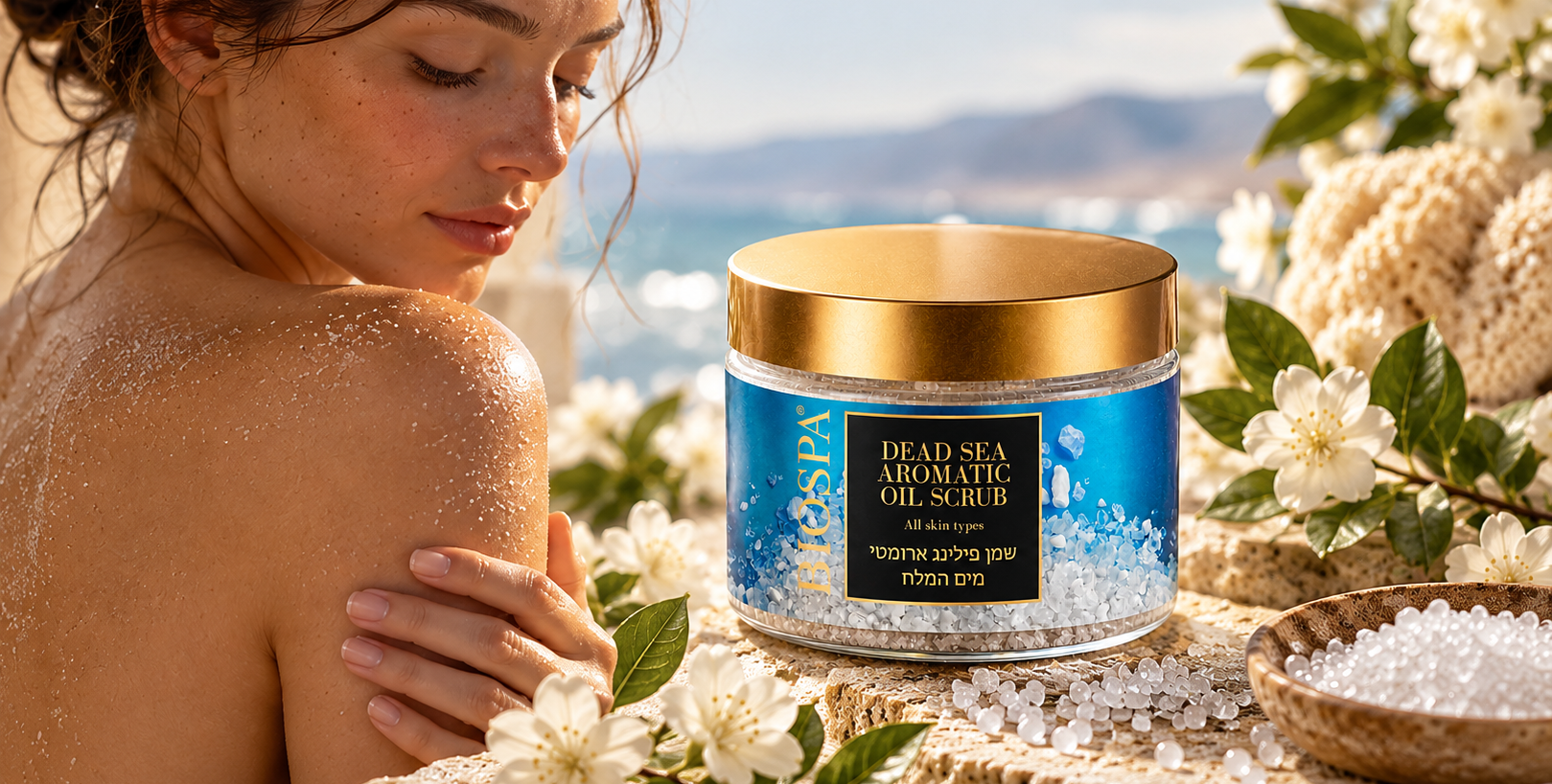
Sugar scrubs are lovely, but salt body scrubs have a particular place in Dead Sea skincare. The most obvious difference is the texture. Salt crystals provide physical exfoliation as they're massaged across damp skin. With a Dead Sea salt scrub, those crystals also bring the mineral composition of Dead Sea salts into the formula. But the salt is only half the story.

Many of the best-feeling salt scrubs combine mineral crystals with an oil-rich base. As the salt provides exfoliation, the oils spread across the skin, creating that wonderfully smooth, conditioned finish people associate with a good spa scrub. This combination - exfoliation plus skin conditioning - is what makes oil-and-salt formulations so satisfying to use.
It also explains why you shouldn't judge a scrub purely by how coarse it feels. Bigger, rougher crystals don't automatically mean a better product. Your skin isn't impressed by bravery.
The Dead Sea Version: Minerals, Salt and Oils
At Jericho Skincare Australia, body exfoliation is particularly interesting because there isn't just one interpretation of the traditional Dead Sea salt scrub. The Bio Spa by Sea of Spa Dead Sea Salt Body Scrubs combine Dead Sea salt exfoliation with aromatic oils and are available in fragrances including vanilla, jasmine, lavender and lemongrass. They're the kind of product that makes body exfoliation feel less like maintenance and more like something you actually look forward to doing.
Then there are the Mon Platin DSM Dead Sea Salt Body Peelings, with scents including rose, vanilla, lavender & patchouli and papaya. Despite the word peeling, these belong to the same broad physical-exfoliation family: mineral-rich body treatments designed to smooth rough-feeling skin while turning an ordinary shower into something rather more spa-like.
Juman Dead Sea body exfoliators offer another take on mineral body exfoliation, extending the Dead Sea ritual beyond facial skincare and into regular body care.
Different name. Slightly different sensory experience. Same fundamental idea: remove rough surface build-up without treating your skin like something that needs to be stripped.
So Which Is Better: A Body Scrub or a Body Exfoliator?
This is one of those beauty questions where the terminology creates a competition that doesn't really exist. A scrub is an exfoliator. The more useful question is whether your skin would benefit from physical or chemical exfoliation.
If you love the feeling of massaging a textured product over your legs and arms and seeing an immediate difference in smoothness, a physical body scrub makes perfect sense.
If you have persistent roughness or small bumps and don't particularly enjoy scrubbing, a leave-on body exfoliant containing ingredients such as lactic, glycolic or salicylic acid may be worth considering.
Some people use both. But—and this is important—not necessarily on the same day. Using an exfoliating acid lotion and then enthusiastically scrubbing the same area because more exfoliation must mean smoother skin is exactly how a perfectly sensible body routine becomes an irritated one.
Physical Exfoliation Isn't the Enemy
Physical scrubs have had a slightly difficult few years. As acids became fashionable in skincare, we started hearing that physical exfoliation was somehow old-fashioned, damaging or inherently inferior. That's too simplistic.
A well-formulated body scrub used gently can be an excellent way to smooth body skin. The problem usually isn't the existence of a grainy product. It's what we do with it. If you press hard, scrub the same patch for several minutes and repeat the process every day, your skin may become irritated.
The same is true of chemical exfoliation. Use an acid too frequently or at an inappropriate strength and your skin won't award bonus points because the exfoliation happened chemically. Method matters. Frequency matters. And your individual skin matters most.
What About Sensitive Skin?
Sensitive skin doesn't automatically have to avoid exfoliation, but it does deserve a more restrained approach. Start gently. Choose a scrub with a comfortable texture rather than the coarsest crystals you can find. Use light pressure and don't keep going simply because the product is still sitting on your skin. Once a week may be plenty.
Some people with sensitive skin may find a carefully chosen chemical exfoliant easier to tolerate than a physical scrub. Others find exactly the opposite. There's no universal winner. If your skin is currently red, cracked, inflamed, sunburnt or irritated, however, skip exfoliation altogether until it settles. Trying to scrub damaged skin back to smoothness rarely ends well.
Dry Skin Can Actually Love a Body Scrub
This sounds slightly contradictory. If skin is dry, why remove anything from it? Because dry skin and accumulated surface cells aren't quite the same thing. When dry body skin becomes flaky and rough, occasional gentle exfoliation can make the surface feel smoother. Follow it immediately with a rich body cream and the combination can be particularly satisfying.

The trick is not to confuse dry skin with something that needs aggressive polishing. For dry skin, an oil-based salt scrub can be a good choice because the experience doesn't stop at exfoliation. The oils help leave the skin feeling conditioned after rinsing.
Then comes moisturiser. That part isn't optional simply because your scrub contains oil. Think of the scrub as smoothing the skin and the body cream as helping maintain softness and comfort afterwards.
What If Your Skin Is Oily?
We tend to talk about oily skin as though it only exists on the face. It doesn't. The chest, back and shoulders contain plenty of sebaceous glands, and some people experience congestion or breakouts across these areas.
This is where aggressively scrubbing because the skin feels oily can backfire. A coarse salt scrub may feel wonderful on legs and elbows but may not be what blemish-prone skin across the back or chest wants. For those areas, a body cleanser or leave-on product containing an ingredient such as salicylic acid may sometimes be more appropriate.
You can still use your Dead Sea salt scrub on the rest of the body.Body skincare doesn't have to be all or nothing.
And What About Those Tiny Bumps on the Arms?
Those persistent little bumps on the backs of the upper arms or thighs are often associated with keratosis pilaris, although not every rough bump is KP, and persistent skin concerns are worth having properly assessed. The temptation is to scrub them away. Usually, scrubbing harder isn't the answer.
Gentle physical exfoliation may improve how the surface feels, but ingredients such as lactic acid, salicylic acid or urea are also commonly used in body products aimed at rough, bumpy skin. If you do use a physical scrub, think gentle and occasional rather than determined and daily. Your arms aren't withholding smoothness because you haven't tried hard enough.
Should You Exfoliate Before or After Shaving?
Before is generally the more logical choice, but timing matters. Gentle exfoliation can remove rough surface build-up before shaving and may help create a smoother surface for the razor. Doing an intense salt scrub immediately before shaving, however, may leave sensitive skin less enthusiastic about the razor that follows.
If you're prone to post-shave irritation, exfoliate the day before. And don't scrub freshly shaved skin simply because it suddenly feels wonderfully smooth. Give it a little time. Freshly shaved skin has already experienced plenty of mechanical exfoliation courtesy of the razor.
How Often Should You Use a Body Scrub?
For most people, once or twice a week is a sensible starting point. Not because your skin owns a calendar, but because physical exfoliation doesn't need to happen every day to be effective. Very dry or sensitive skin may prefer once a week or less.
Areas such as elbows, knees and heels may tolerate more attention than the chest or décolletage. And your routine may change with the seasons. During a Melbourne winter, when indoor heating, cooler weather and hot showers conspire to make skin feel drier, you might exfoliate less frequently and moisturise more generously.
In warmer weather, the routine may change again. Follow your skin rather than an arbitrary schedule.
How to Use a Salt Body Scrub Without Overdoing It
You don't need a complicated technique. Step into the shower and wet your skin. Take a small amount of scrub and massage it gently over the body using circular movements. Spend a little more time on rough areas such as elbows, knees and heels, and considerably less time on delicate skin. Then rinse. That's it.
Don't use maximum pressure. Don't repeatedly scrub one area until it's red. And don't assume leaving salt crystals sitting on the skin for an extra fifteen minutes will somehow unlock a secret level of exfoliation. Afterwards, pat the skin dry and apply body moisturiser.
The combination of scrub followed by body cream is far more important than trying to turn the exfoliation itself into an endurance event.
Should You Exfoliate Before a Dead Sea Salt Bath?
You can, but consider how your skin behaves. A gentle scrub followed by a relaxing Dead Sea mineral bath can make a lovely at-home spa ritual for normal skin. For dry or sensitive skin, doing both at once may simply be unnecessary. Try exfoliating one day and enjoying your mineral bath on another.
This is a useful principle for body care generally: just because two things are individually good doesn't mean doing both simultaneously makes them twice as good. Chocolate and garlic are both excellent. You see the problem.
What Should You Use After a Body Scrub?

A body cream or moisturiser. Every time. Freshly exfoliated skin tends to feel incredibly smooth, which makes it tempting to decide the job is finished. It's actually the perfect time to moisturise. Look for body products containing ingredients such as glycerin, shea butter, botanical oils, vitamin E, hyaluronic acid or mineral complexes, depending on the formulation and your skin type.
If your skin is very dry, choose a richer cream. If you dislike anything heavy, use a lighter lotion. The best moisturiser isn't the richest one. It's the one you will actually apply.
Do You Need Both a Body Scrub and a Chemical Body Exfoliator?
Usually, no. You can use both if they solve different problems, but there is no skincare rule saying a complete body routine requires two forms of exfoliation. For many people, a Dead Sea salt scrub once or twice a week followed by regular moisturising is more than enough.
Someone with persistent rough or bumpy areas might choose a chemical body exfoliant instead. Someone else might use an acid-based product on the backs of the arms and a beautiful salt scrub on the legs. That's perfectly reasonable.
What doesn't make much sense is layering every available form of exfoliation onto the same skin simply because they're all in the bathroom. Your goal is smoother skin. Not maximum exfoliation.
Body Scrub, Body Exfoliator or Body Peeling: A Quick Guide
| If you want... | Consider... |
|---|---|
| Immediately smoother-feeling skin | Physical body scrub |
| A spa-like body treatment | Dead Sea salt scrub |
| Exfoliation plus a conditioned, silky feel | Oil-based salt scrub |
| Help with persistent rough texture | Chemical body exfoliator |
| Care for rough elbows, knees or heels | Physical scrub followed by rich body cream |
| Care for bumpy body skin | Gentle chemical exfoliation may be worth considering |
| Aromatic Dead Sea body care | Bio Spa or DSM salt scrub/body peeling |
| A mineral body exfoliation ritual | Bio Spa, Mon Platin DSM or Juman Dead Sea exfoliator |
The most important line in that table is the one you can't see: Choose according to your skin, not according to how many exfoliating products you own.
Frequently Asked Questions
What is the difference between a body scrub and a body exfoliator?
A body scrub is a type of physical body exfoliator. It uses particles such as salt or sugar to remove rough surface build-up through massage. “Body exfoliator” is a broader term that can also include chemical exfoliating products containing ingredients such as AHAs or BHAs.
Is body peeling the same as body scrub?
Sometimes. In many body-care ranges, particularly European and Dead Sea skincare, “body peeling” is used to describe a physical exfoliating scrub. Always check the product directions and ingredients rather than relying only on the name.
Is a salt scrub better than a sugar scrub?
Neither is universally better. Salt scrubs tend to provide a distinctly mineral, spa-like exfoliation, while sugar crystals generally dissolve more readily. Texture, particle size, the surrounding formula and your skin type are more important than choosing one ingredient simply because it's salt or sugar.
What are Dead Sea salt scrubs good for?
They physically exfoliate rough surface skin and can leave the body feeling smoother. Oil-based formulations can also leave the skin feeling conditioned and soft after rinsing.
How often should I use a body scrub?
Once or twice a week is a good starting point for many people. Sensitive or very dry skin may need less frequent exfoliation.
Can I use body scrub every day?
Daily physical exfoliation isn't necessary for most skin and may lead to irritation. Give your skin time between treatments.
Should I use body scrub on wet or dry skin?
Follow the instructions for the individual product, although many body scrubs are designed to be massaged over damp skin in the shower.
Do I use body wash or body scrub first?
Generally, cleanse first and exfoliate afterwards. This gives the scrub a clean surface to work on and allows you to finish the routine with moisturiser.
Should I moisturise after using a body scrub?
Yes. Applying body cream or lotion after exfoliation helps keep the skin feeling soft, comfortable and moisturised.
Can I use a Dead Sea salt scrub on my face?
A body scrub should not automatically be used on facial skin. Body exfoliators are often considerably more textured than products designed for the face. Use products according to their intended area and directions.
Can sensitive skin use a salt scrub?
Some sensitive skin can tolerate gentle physical exfoliation, while other skin may find salt scrubs too stimulating. Start cautiously and avoid exfoliating irritated, broken or inflamed skin.
Which is better for dry skin: a body scrub or body exfoliator?
It depends on the product. An oil-rich physical scrub can work beautifully for some dry skin, particularly when followed by body cream. Very sensitive or persistently rough skin may need a different approach.
So, Do You Actually Need Both?
Probably not. And that's rather good news. The beauty industry is very good at taking one simple skincare step and turning it into four separate products. Body exfoliation doesn't need to be one of them.
If you love the tactile ritual of a Dead Sea salt scrub, use one. Massage it gently over the skin, enjoy the fragrance and texture, rinse it away and follow with body cream. If you prefer an acid-based body exfoliator, use that instead. If different parts of your body need different things, combine the two intelligently rather than applying everything everywhere.
At Jericho Skincare Australia, the Bio Spa Dead Sea Salt Body Scrubs, Mon Platin DSM Dead Sea Salt Body Peelings and Juman Dead Sea body exfoliators offer slightly different ways to bring mineral exfoliation into your body-care routine. But the principle behind all of them is beautifully simple.
Smooth what feels rough. Moisturise what feels dry. Don't scrub what already feels irritated.Your body skincare routine really doesn't need to be more complicated than that.