
How to Prevent Razor Burn, Redness & Irritation After Shaving
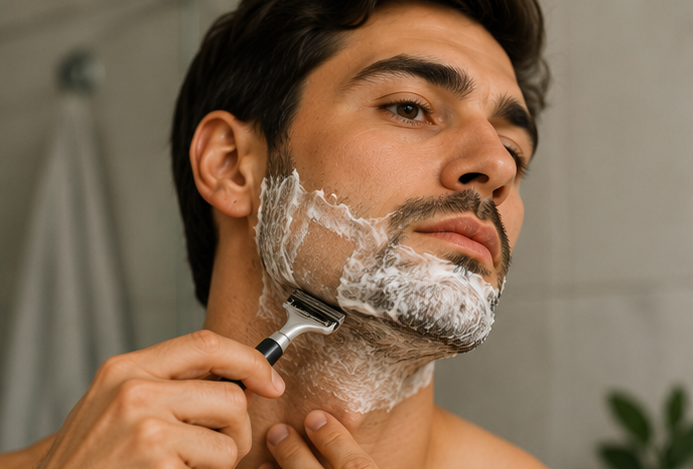
You shave. Everything looks perfectly fine. Then, ten minutes later, your neck starts feeling suspiciously warm. By the time you leave the bathroom, you've got redness, tiny bumps and that unmistakable burning sensation that makes putting anything on your face feel like a questionable decision.
Razor burn. It's common, annoying and—despite what generations of men have apparently accepted—not something you simply have to put up with every time you shave.
In many cases, razor burn happens because shaving creates too much friction or because you repeatedly pass a blade over skin that isn't properly prepared or lubricated. A blunt razor, shaving too closely, pressing too hard and using irritating post-shave products can make matters worse.
The good news? A few changes to how you shave and what you do immediately afterwards can make a surprisingly big difference. So before blaming your skin, let's look at your shaving routine.
What Is Razor Burn?
Razor burn is temporary skin irritation that develops after shaving. It commonly appears as:
- Redness
- Burning or stinging
- Tenderness
- Itching
- Dryness
- Small red bumps
- A warm or uncomfortable feeling
You might notice it immediately after shaving or gradually over the next few hours. The neck is a particularly common problem area for men because facial hair often grows in several different directions there. And that matters more than you might think.
Why Do I Get Razor Burn Every Time I Shave?
Usually, it's not one single thing. Shaving involves dragging a blade across your skin while cutting thousands of hairs extremely close to the surface. Do that gently, with good preparation and enough lubrication, and your skin may handle it beautifully.
Do it repeatedly with a blunt razor, no preparation and enough pressure to remove a layer of paint? Your skin may have other ideas. Common causes of razor burn after shaving include:
- Shaving dry skin
- Using a blunt razor
- Pressing too hard
- Shaving repeatedly over the same area
- Shaving against the direction of hair growth
- Not using enough shaving cream or gel
- Using very hot water
- Shaving too quickly
- Using harsh post-shave products Shaving already irritated skin
And sometimes it's simply a combination.
1. Prepare Your Skin Before You Pick Up the Razor
One of the easiest ways to reduce shaving irritation happens before shaving begins. Hair becomes easier to cut when it's properly hydrated. That's one reason shaving after a shower often feels much easier than shaving a completely dry face immediately after waking up. Warm, not painfully hot, water can help soften facial hair and prepare the skin. If you're not showering first, wash your face gently with warm water and a facial cleanser. You're giving your razor a cleaner, softer surface to work across.
A simple pre-shave routine:
Cleanse → warm water → shaving cream or gel → shave
Nothing revolutionary. But often much better than:
Wake up → razor → regret.
2. Give Your Shaving Cream Time to Work
Applying shaving cream and immediately attacking your beard slightly defeats the purpose. Give it a moment.
A good shaving cream, foam or gel provides lubrication between the razor and your skin while helping keep facial hair hydrated. That reduces friction. And friction is one of the main things we're trying to control. Apply your shaving product evenly and allow it to sit on the beard briefly before shaving. You don't need to stand there for ten minutes. Even a short pause while brushing your teeth or preparing your razor can help.
3. Stop Using a Blunt Razor
You know that razor you've been meaning to replace? This is your reminder. A sharp blade should cut hair cleanly. A dull blade requires more pressure and more passes, and may tug at the hair rather than cutting efficiently.
That means: more friction + more scraping + more irritation.
Exactly what sensitive post-shave skin doesn't need. How frequently you should replace a blade depends on:
- How often you shave
- How coarse your facial hair is
- The type of razor
- How well you rinse and maintain it
Instead of obsessing over a particular number of shaves, pay attention to how the razor feels. If it's tugging, dragging or requiring extra pressure, it's probably telling you something.
4. Don't Press So Hard
This is a very common shaving mistake. People assume: more pressure = closer shave. What it often means is: more pressure = more irritation.
A sharp razor should do most of the work. You don't need to force it into the skin. Use light, controlled strokes and let the blade glide across the shaving cream. If you constantly need significant pressure to remove hair, check the blade.
5. Shave With the Direction of Hair Growth
If you regularly experience razor burn, this can be one of the most useful changes to make. Shaving against the grain can give you an extremely close shave. Unfortunately, it can also increase irritation and contribute to ingrown hairs in people who are prone to them.
Start by shaving with the direction your hair naturally grows. And don't assume every part of your beard grows downward. Look closely. Hair on the cheeks might grow down. Hair around the jaw may grow diagonally. Hair on the neck can apparently decide to grow in whichever direction causes maximum inconvenience. Spend a few days observing your beard growth. Once you understand the pattern, you can shave accordingly.
6. Stop Going Over the Same Spot Again and Again
One pass. Nothing.
Second pass. Better.
Third pass. Almost perfect.
Fourth pass. Absolutely smooth.
Fifteen minutes later? Red neck.
Every time the blade travels over the skin, it creates additional friction. If an area needs another pass, reapply some shaving product first rather than repeatedly dragging a relatively dry blade across it. And consider whether you genuinely need every hair cut impossibly close. Sometimes the difference between a comfortable shave and razor burn is about half a millimetre of ambition.
7. Rinse the Razor While You Shave
A razor clogged with hair and shaving cream isn't going to glide particularly well. Rinse the blade frequently during shaving. This helps remove trapped hair and product so the blade can work efficiently.
Also clean the razor properly after you're finished rather than leaving yesterday's beard permanently embedded between the blades. Your future face will appreciate it.
8. Be Careful With Hot Water
A very hot shower can feel fantastic. Freshly shaved skin may disagree. Hot water can contribute to dryness and irritation, particularly if your skin is already sensitive. Use comfortably warm water to prepare the beard, then rinse gently after shaving. There's no need to subject your face to extreme temperatures in either direction.
What Should You Do Immediately After Shaving?
This is where a lot of otherwise reasonable shaving routines go wrong. You've just passed a blade across your skin. Possibly several times. This is not the moment to declare war on your face. Your post-shave goal should be: Soothe → Hydrate → Protect, not: Burn → Sting → Prove you're a man.
9. Use an Aftershave That Actually Suits Your Skin
For generations, aftershave was practically synonymous with a strongly fragranced alcohol splash. Apply. Experience fire. Pretend everything is fine. Thankfully, men's skincare has moved on.
Modern aftershaves can be formulated as:
- Balms
- Creams
- Lotions
- Gels
- Traditional splashes
For skin prone to razor burn, a soothing aftershave balm or cream is often worth considering because it can combine post-shave comfort with moisturising skincare ingredients. Depending on the formula, look for ingredients such as: Aloe vera, Glycerin, Hyaluronic acid, Vitamin E, Botanical extracts, Natural oils, Dead Sea minerals and other moisturising and soothing ingredients
At Jericho Skincare Australia, our men's skincare collection includes aftershaves from several Dead Sea skincare ranges, making it possible to choose according to your skin type and preferred texture rather than treating aftershave as nothing more than fragrance.
Does Aftershave Prevent Razor Burn?
Not exactly. A good aftershave can't undo a terrible shave. If you've used a blunt blade, pressed too hard and passed over your neck seven times, no balm can travel backwards in time and stop that happening.
But the right post-shave product can help soothe, hydrate and comfort freshly shaved skin, making it an important part of a shaving routine. Think of it this way: Your shaving technique helps prevent irritation. Your aftershave helps care for your skin afterwards.
You want both.
10. Avoid the "If It Burns, It's Working" Myth
Can we retire this one? A skincare product doesn't need to hurt to prove its effectiveness. That dramatic sting from traditional aftershave isn't your pores celebrating.
If your skin already feels raw or irritated, a strongly alcohol-based or heavily fragranced formula may feel uncomfortable. Some people enjoy traditional aftershave splashes and tolerate them perfectly well. That's fine. But if you consistently experience:
- Burning
- Redness
- Tightness
- Dryness
after applying your aftershave, try something gentler. Your face doesn't need character building.
11. Moisturise After Shaving
Do you need moisturiser if you've already used aftershave? Sometimes. It depends on the product. A rich aftershave balm may provide enough moisturisation on its own. A lighter lotion may not.
If your skin still feels dry or tight after your aftershave has absorbed, follow with a facial moisturiser.
Your post-shave routine might look like:
Rinse → aftershave balm → moisturiser if needed
Simple.
12. Don't Exfoliate Freshly Shaved Skin Just Because It's "Skincare Night"
Your calendar says exfoliation night. Your face says absolutely not. Listen to your face. Shaving itself already creates mechanical interaction with the skin and removes surface material. Immediately following a close shave with:
- A facial scrub
- Strong exfoliating acids
- A facial peel
- Retinol
may increase irritation for some people. You don't need to fit every skincare treatment into the same evening. Move exfoliation to another day if freshly shaved skin tends to become sensitive.
How to Soothe Razor Burn When It's Already Happened
So you've read all of this slightly too late. Your neck is currently glowing red. What now? First: Stop irritating it further. Keep the routine simple.
Try: Gentle cleanse if necessary → soothing moisturising product → leave your skin alone
A cool, clean compress may also feel comfortable on irritated skin. And give your skin some time before shaving the same area again if possible. Sometimes the best treatment is simply not creating more friction.
Razor Burn vs Razor Bumps: Are They the Same Thing?
Not quite. They're often discussed together, but they're different.
Razor burn
Razor burn is primarily irritation caused by shaving.
Razor bumps
Razor bumps often involve ingrown hairs.
After a hair is shaved, it can curve back towards the skin or become trapped beneath the surface, creating an inflamed bump. They're particularly common in people with coarse or curly facial hair. You can have one without the other. Or, because skin enjoys keeping things interesting, you can have both.
How Can You Help Prevent Razor Bumps?
Some of the same habits that reduce razor burn can also help reduce the likelihood of ingrown hairs. Try:
- Shaving with the direction of hair growth
- Avoiding excessive pressure
- Not repeatedly shaving the same area
- Avoiding an unnecessarily close shave
- Using a sharp, clean razor
- Giving irritated skin time to recover
Gentle exfoliation between shaving days may also be useful for some people, but avoid overdoing it. If you experience frequent, severe or inflamed razor bumps, professional advice may be worthwhile.
Why Is My Neck Always Irritated After Shaving?

The neck deserves its own section because it seems determined to make shaving difficult. Hair growth on the neck is often less uniform than on the cheeks. You may have hair growing downwards here, sideways there, diagonally somewhere else and apparently north-west in one inexplicable patch.
If you shave the entire neck in one direction, you're probably shaving some areas against the grain without realising it. Try this:
Let your facial hair grow for a day or two.
Stand in good light.
Look carefully at the direction of growth across different areas of your neck.
Then shave with those directions next time. This simple exercise can completely change how you approach shaving.
What Is the Best Aftershave for Sensitive Skin?
If you're prone to redness and irritation, look beyond the word aftershave and examine the formula. A good option for sensitive-feeling skin may be a moisturising balm or cream designed to leave freshly shaved skin feeling calm and comfortable.
And if you know fragrance causes problems for your skin, choose accordingly. There's no universal "best aftershave for sensitive skin." The best one is the formula your skin consistently tolerates well.
What About Dead Sea Minerals After Shaving?

Dead Sea mineral skincare can fit naturally into a men's post-shave routine. Dead Sea salts contain naturally occurring minerals including magnesium, calcium, potassium and sodium, and research into magnesium-rich Dead Sea salt solutions has investigated effects on skin hydration and barrier-related measures under controlled conditions. That doesn't mean an aftershave containing Dead Sea minerals is equivalent to bathing in the Dead Sea.
Formulation matters. But combining Dead Sea minerals with ingredients such as aloe vera, glycerin, hyaluronic acid, botanical extracts or natural oils can create a well-rounded post-shave skincare product.
This is one reason you'll find Dead Sea minerals throughout many of the men's skincare and aftershave formulas available from Jericho Skincare Australia.
A Simple Shaving Routine for Sensitive Skin
If shaving regularly leaves your face red, don't make the routine more complicated. Make it gentler.
Before shaving
1. Cleanse gently. Remove excess oil and debris.
2. Use warm water. Help soften the beard.
3. Apply plenty of shaving cream or gel. And give it a moment to work.
While shaving
4. Use a sharp razor. Don't keep negotiating with a blunt one.
5. Shave with the grain. Particularly on sensitive areas.
6. Use light pressure. Let the razor do the work.
7. Limit repeat passes. Reapply shaving product if another pass is necessary.
After shaving
8. Rinse gently. Use comfortable water rather than extreme heat.
9. Apply a soothing aftershave. Choose a texture and formula appropriate for your skin.
10. Moisturise if needed. Especially if your skin feels dry or tight.
That's it. A good shave doesn't need 14 steps. It needs good technique.
What If You Have Oily Skin?
Oily skin can still experience razor burn. And oily skin still needs post-shave hydration. Instead of skipping aftershave and moisturiser completely, look for lighter textures. You might prefer: Cleanse → shave → lightweight aftershave balm or lotion
If additional moisturisation is necessary, choose a lightweight facial moisturiser rather than a very rich cream. Don't try to "dry out" oily skin after shaving. Freshly shaved skin generally appreciates a little kindness.
What If You Have Dry Skin?
Dry skin and shaving can be an uncomfortable combination because both inadequate lubrication and repeated razor passes can make that tight feeling worse. Focus on:
- Gentle cleansing
- Plenty of shaving lubrication
- Minimal razor passes
- A moisturising aftershave balm
- Facial moisturiser if needed
And don't shave dry. Your skin has suffered enough.
What If You're Over 40?
As skin matures, it can gradually become drier and may not recover from irritation quite as quickly as it once did. That makes your post-shave routine more important, not less. Look for aftershaves that behave more like skincare products than simply scented splashes.
Ingredients such as Hyaluronic acid, Peptides, Antioxidants, Natural oils, Aloe vera, Vitamin E and Dead Sea minerals can make an aftershave part of your broader men's skincare routine. Your aftershave doesn't need to stop at "smells nice."
7 Shaving Mistakes That Can Make Razor Burn Worse
If redness appears after almost every shave, check whether you're doing any of these.
1. Shaving without preparing the beard
Dry, coarse hair is harder to cut comfortably.
2. Keeping the same blade for too long
If it drags, replace it.
3. Pressing hard
Closer isn't always better.
4. Shaving against the grain everywhere
Particularly problematic if you're prone to irritation or ingrown hairs.
5. Repeatedly shaving the same patch
Every pass creates more friction.
6. Using an aftershave that consistently burns
Tradition isn't a good enough reason.
7. Throwing strong skincare actives onto freshly shaved skin
Your skin may prefer a quieter evening.
Frequently Asked Questions About Razor Burn
How do I prevent razor burn after shaving?
Prepare the beard with warm water, use plenty of shaving cream or gel, shave with a sharp razor using light pressure, follow the direction of hair growth and avoid repeatedly shaving the same area. Finish with a soothing post-shave product appropriate for your skin.
How long does razor burn last?
Mild razor burn often settles relatively quickly once the skin is no longer being irritated. If irritation persists, becomes painful, develops pus or appears infected, seek professional medical advice.
Why does my face turn red after shaving?
Shaving creates friction between the razor and skin. Too much pressure, a dull blade, insufficient lubrication or repeated passes can increase irritation and visible redness.
Should I use aftershave if I have razor burn?
A gentle, moisturising aftershave balm may help freshly shaved skin feel more comfortable. Avoid products that consistently cause strong burning or additional irritation.
Why does aftershave burn?
Some traditional aftershaves contain significant amounts of alcohol or fragrance, which can sting freshly shaved or already irritated skin. If this happens regularly, try a gentler balm, cream or lotion.
Does moisturiser help razor burn?
A suitable moisturiser can help relieve the dry, tight feeling that sometimes accompanies shaving irritation and support the skin's moisture barrier.
Should I shave against the grain for a closer shave?
Shaving against the grain can produce a closer result, but it may also increase irritation and the likelihood of ingrown hairs for some people. If you're prone to razor burn, try shaving with the direction of hair growth.
Can I exfoliate after shaving?
If your skin is prone to irritation, it may be better to exfoliate on a different day rather than immediately after a close shave.
Why do I get razor burn only on my neck?
Neck hair often grows in several different directions. You may unknowingly be shaving against the grain in certain areas. Mapping your natural beard growth can help.
Is razor burn the same as acne?
No. Razor burn is irritation associated with shaving. Razor bumps can involve ingrown hairs, while acne is a different skin condition.
Your Skin Isn't the Problem - Your Shaving Routine Might Be

It's easy to decide you simply have "sensitive skin." Sometimes you do. But if redness and burning appear almost exclusively after shaving, it's worth looking at the thing that happened immediately beforehand.
The razor. You don't necessarily need a more complicated skincare routine.
You may need: a sharper blade, less pressure, more lubrication, fewer passes and a better aftershave.
Start there. Because shaving should leave you looking freshly shaved. Not like you've just had an argument with your razor.
Explore men's skincare and aftershaves at Jericho Skincare Australia, including Dead Sea mineral aftershave balms, creams and skincare designed to hydrate, soothe and care for freshly shaved skin.