Skin Barrier Repair: 7 Signs Your Skin Barrier Is Damaged & What to Do
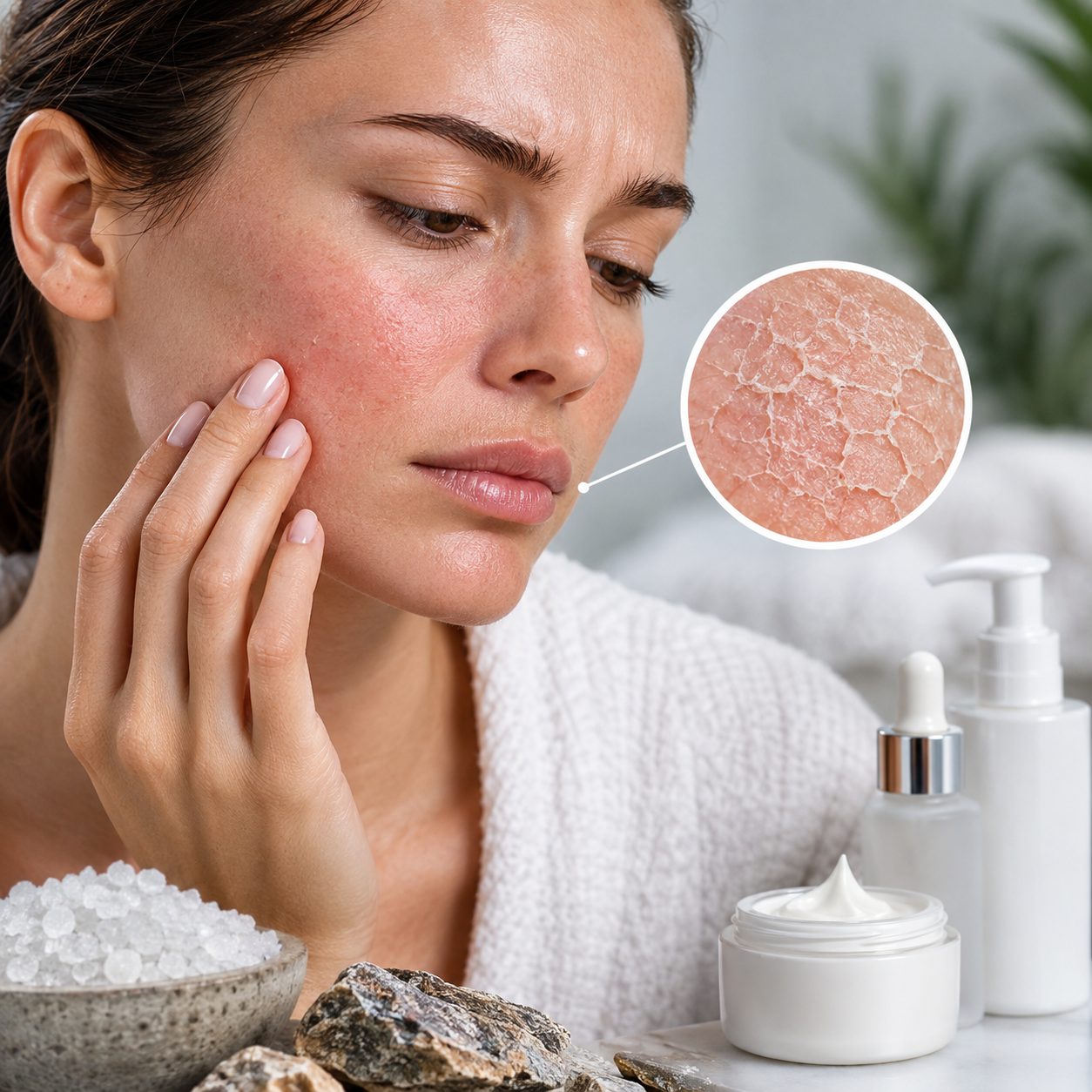
Does your skin suddenly feel dry, tight, itchy or unusually sensitive? Products you’ve used for months might start to sting, your face may look red, or you might notice flaky patches that refuse to disappear. Your skin barrier could be damaged.
The good news? A damaged skin barrier can often be supported with a simpler, gentler skincare routine focused on hydration, protection and giving your skin time to recover. In this guide, we’ll explain what the skin barrier is, the signs of a damaged skin barrier, what can cause it and how to help repair and protect it.
What Is Your Skin Barrier?
Think of your skin barrier as your skin’s personal security system. The outermost layer of your skin, called the stratum corneum, helps keep essential moisture in while protecting your skin from environmental stressors. A popular way to picture it is as a brick wall.
Your skin cells are the bricks, while lipids such as ceramides, cholesterol and fatty acids help form the material holding everything together. When that barrier is functioning well, your skin is better able to retain moisture and protect itself. When it becomes disrupted, moisture can escape more easily and your skin may become dry, irritated and sensitive.
7 Signs Your Skin Barrier May Be Damaged

Not every dry patch means you have a damaged skin barrier. But if several of these symptoms appear together—particularly after changing your skincare routine—it may be time to give your skin some extra care.
1. Your Skin Feels Tight After Cleansing
You wash your face and immediately feel like you need to apply moisturiser. Sound familiar?
That uncomfortable, "too clean" tight feeling can be a sign that your cleanser or cleansing routine is removing too much of your skin's natural oils. Cleansing should leave your skin feeling clean and comfortable - not stripped.
2. Products Suddenly Sting or Burn
Your favourite serum has never caused a problem before, but suddenly it stings when you apply it. When your skin barrier is compromised, products that were previously comfortable may begin to cause irritation. This is particularly noticeable with stronger active ingredients. If practically everything you put on your face starts to sting, your skin may be asking for less, not more.
3. Your Skin Is Dry and Flaky
Persistent dryness and flaking are common signs that your skin isn't retaining moisture effectively. You might notice flakes around your nose, cheeks, chin or forehead. And simply applying more moisturiser doesn't always solve the problem if you continue using products that are irritating your skin at the same time.
4. Your Skin Looks Red or Irritated
A weakened skin barrier can make your complexion appear more reactive than usual. You may notice redness, rough patches, itching or general irritation, particularly after cleansing or applying skincare. If redness is persistent, painful or severe, however, don't automatically assume it's simply a damaged skin barrier. Skin conditions can cause similar symptoms, so consider speaking with a qualified healthcare professional.
5. Your Skin Feels Dehydrated
Here's where things can get confusing. Dry skin and dehydrated skin aren't exactly the same thing. Dry skin generally lacks oil, while dehydrated skin lacks water.
That means even oily or combination skin can feel dehydrated. Your face might feel tight while simultaneously looking shiny—which often leads people to reach for even stronger cleansers. That can make matters worse.
6. Your Skin Has Become Much More Sensitive
Has your skin suddenly become temperamental? Weather, hot water, shaving, exfoliating or products that previously caused no trouble may suddenly trigger discomfort. Increased sensitivity can happen when your skin barrier isn't functioning at its best. Rather than introducing another "miracle" product, this is usually a good moment to simplify your routine.
7. Your Skin Feels Rough Instead of Smooth
Healthy-looking skin doesn't need to be perfectly poreless or glass-like. But when your barrier is struggling, its texture may feel noticeably rough, uneven or flaky. Your first instinct might be to exfoliate the roughness away.
Be careful. If over-exfoliation caused the problem in the first place, adding another acid or scrub may simply continue the cycle.
What Causes a Damaged Skin Barrier?
There's rarely one universal culprit.
Your skin barrier can become disrupted by a combination of your skincare habits and environmental factors. Common triggers include:
- Over-exfoliating
- Using strong skincare actives too frequently
- Harsh or overly stripping cleansers
- Washing your face too often
- Very hot showers or water
- Cold, dry or windy weather
- Low humidity
- Excessive sun exposure
- Shaving irritation
- Introducing too many new products at once
One particularly common problem is doing too much skincare.
It’s easy to assume that if one active ingredient is good, combining several must be even better. Your morning routine becomes vitamin C plus acids plus several serums. Your evening routine includes retinol, another exfoliant and a mask. Before long, your bathroom starts looking like a chemistry lab—and your skin isn't necessarily happier for it. More skincare doesn't always mean better skin.
How to Help Repair Your Skin Barrier
If your skin seems irritated, the goal is surprisingly simple: Stop fighting your skin and start supporting it.
Step 1: Simplify Your Routine
Temporarily take your skincare routine back to basics. A simple routine might include:
Morning: Gentle cleanse → moisturiser → sunscreen
Evening: Gentle cleanse → hydrating or barrier-supporting product → moisturiser
You don't necessarily need seven serums. When your skin is irritated, a simple routine makes it easier to identify what your skin tolerates and removes unnecessary potential triggers.
Step 2: Give Strong Actives a Break
If you've been enthusiastically exfoliating, now probably isn't the time to add another peel. Consider temporarily reducing potentially irritating products such as strong exfoliating acids or retinoids until your skin feels comfortable again. Once your skin settles, you can gradually reintroduce products one at a time.
Slow and steady is much easier on your skin—and makes it much easier to identify which product causes irritation if a problem returns.
Step 3: Focus on Hydration
Hydration is an important part of supporting a compromised skin barrier. Look for skincare ingredients commonly used to help attract or retain moisture, such as:
- Glycerin
- Hyaluronic acid
- Ceramides
- Squalane
- Panthenol
 Apply moisturiser regularly, especially after cleansing. If your skin feels dry, choose a richer moisturiser that helps reduce moisture loss and leaves your skin feeling comfortable.
Step 4: Be Gentle When Cleansing
Your face does not need to squeak after cleansing. That squeaky-clean feeling isn't a skincare achievement. Choose a gentle cleanser and use lukewarm rather than very hot water. Avoid aggressively rubbing your skin with washcloths, brushes or cleansing devices while it's irritated. Pat your face dry gently instead.
Step 5: Don't Forget Sunscreen
Sun protection is important every day, but it becomes particularly relevant when your skin is already feeling sensitive. Use a broad-spectrum sunscreen appropriate for your skin and follow the product directions for application and reapplication. And remember: sunscreen isn't only for summer holidays. UV exposure happens throughout the year.
What About Dead Sea Minerals?
Dead Sea skincare has been used for generations in bathing and beauty rituals, and the mineral-rich waters and mud of the Dead Sea contain minerals including magnesium, calcium and potassium.
So where do minerals fit into a modern skincare routine?
Mineral-rich skincare can be incorporated alongside a routine focused on cleansing, moisturising and supporting comfortable, hydrated skin. The important thing is to choose products based on your individual skin needs and the complete formulation, rather than assuming that one ingredient will magically repair everything.
If your skin is already irritated, introduce any new skincare product gradually and follow its directions carefully.
Should You Exfoliate a Damaged Skin Barrier?
Usually, this isn't the moment to chase perfectly smooth skin. If your skin is stinging, peeling, red or unusually sensitive, aggressive exfoliation may make it feel worse. Give your skin time to settle before gradually returning to exfoliating products. When you do restart, avoid the "more is better" approach. Your skin doesn't need to feel raw for an exfoliant to be working.
Can You Use a Face Mask When Your Skin Barrier Is Damaged?
It depends on the mask and how your skin is feeling. A gentle, moisturising mask may feel comfortable for some people, while strong exfoliating or intensive treatments may not be appropriate when skin is irritated.
And yes—mud and mineral masks still have a place in a good skincare routine.
The trick is using the right mask for your skin type, at the right frequency, rather than masking every night because social media told you to. If you're interested in mineral masks, our guide to Dead Sea mud mask benefits explains how they work, who they're best suited to and how often you should use one.
How Long Does Skin Barrier Repair Take?
There isn't a universal countdown. How quickly your skin feels normal again depends on what caused the irritation, how significant it is, your skin type and what you're using on it.
Minor irritation may settle relatively quickly once the trigger is removed, while more significant barrier problems can take longer. Instead of obsessing over a particular number of days, look for improvements such as:
- Less tightness
- Less stinging
- Reduced flaking
- Improved comfort
- Products becoming easier to tolerate
If your symptoms aren't improving—or you experience significant swelling, pain, cracking, persistent redness or severe itching—seek professional medical advice rather than continuing to experiment with skincare products.
How to Keep Your Skin Barrier Healthy
Once your skin feels comfortable again, prevention is much easier than repeatedly trying to rescue irritated skin. Keep things simple:
Cleanse gently. Moisturise consistently. Protect your skin from the sun. Introduce active ingredients gradually. And pay attention when your skin tells you something isn't working.
You don't have to follow every skincare trend. You don't need every viral serum. And you definitely don't need a 12-step routine to have healthy-looking skin.
Consistency usually beats complexity.
Frequently Asked Questions
What is the fastest way to repair a damaged skin barrier?
Start by removing likely sources of irritation and simplifying your routine. Gentle cleansing, regular moisturising and daily sun protection can help support your skin while it recovers. Avoid repeatedly introducing new products while your skin is irritated.
How do I know if my skin barrier is damaged?
Common signs include unusual dryness, tightness, flaking, redness, rough texture, increased sensitivity and skincare products suddenly stinging. These symptoms can also be associated with skin conditions, so persistent or severe symptoms should be assessed professionally.
Can oily skin have a damaged skin barrier?
Yes. Having oily skin doesn't mean your skin can't become dehydrated or irritated. In fact, repeatedly using harsh cleansers and exfoliants in an attempt to remove oil can leave skin feeling tight and uncomfortable.
Should I stop retinol if my skin barrier is damaged?
If your skin is irritated, stinging or peeling, it may be sensible to temporarily reduce potentially irritating active products and allow your skin to settle. If you're using a prescription retinoid, follow the advice of your healthcare professional rather than changing treatment based solely on general skincare advice.
Can over-exfoliation damage the skin barrier?
Over-exfoliating can disrupt the outer layers of the skin and lead to dryness, irritation and increased sensitivity. If your skin feels sore or unusually reactive, give exfoliation a break.
Are Dead Sea minerals good for dry skin?
Dead Sea mineral skincare can be part of a skincare routine for dry skin, but the overall product formulation matters. For dry skin, look for products that combine an enjoyable mineral skincare experience with ingredients that support hydration and moisturisation.
Can men damage their skin barrier from shaving?
Frequent shaving can contribute to irritation, particularly when combined with blunt blades, excessive pressure or irritating post-shave products. A gentle shaving routine followed by appropriate post-shave skincare can help keep skin feeling comfortable.
Give Your Skin a Little Less—and Get More From Your Routine
When your skin starts feeling dry, tight or irritated, buying five new products isn't necessarily the answer.
Sometimes the smartest skincare move is to simplify.
Use gentle products. Prioritise hydration. Protect your skin from UV exposure. Give irritating actives a break when needed. Then gradually build your routine again once your skin feels comfortable.
And if you'd like to explore skincare built around the unique mineral-rich environment of the Dead Sea, discover our range of Dead Sea moisturisers, serums, masks and mineral skincare treatments.
Your skin doesn't need the most complicated routine. It needs the right routine for you.
-
Posted in
Ceramides, Skin Barrier