Face Masks Are Back but Which Type Does Your Skin Actually Need?
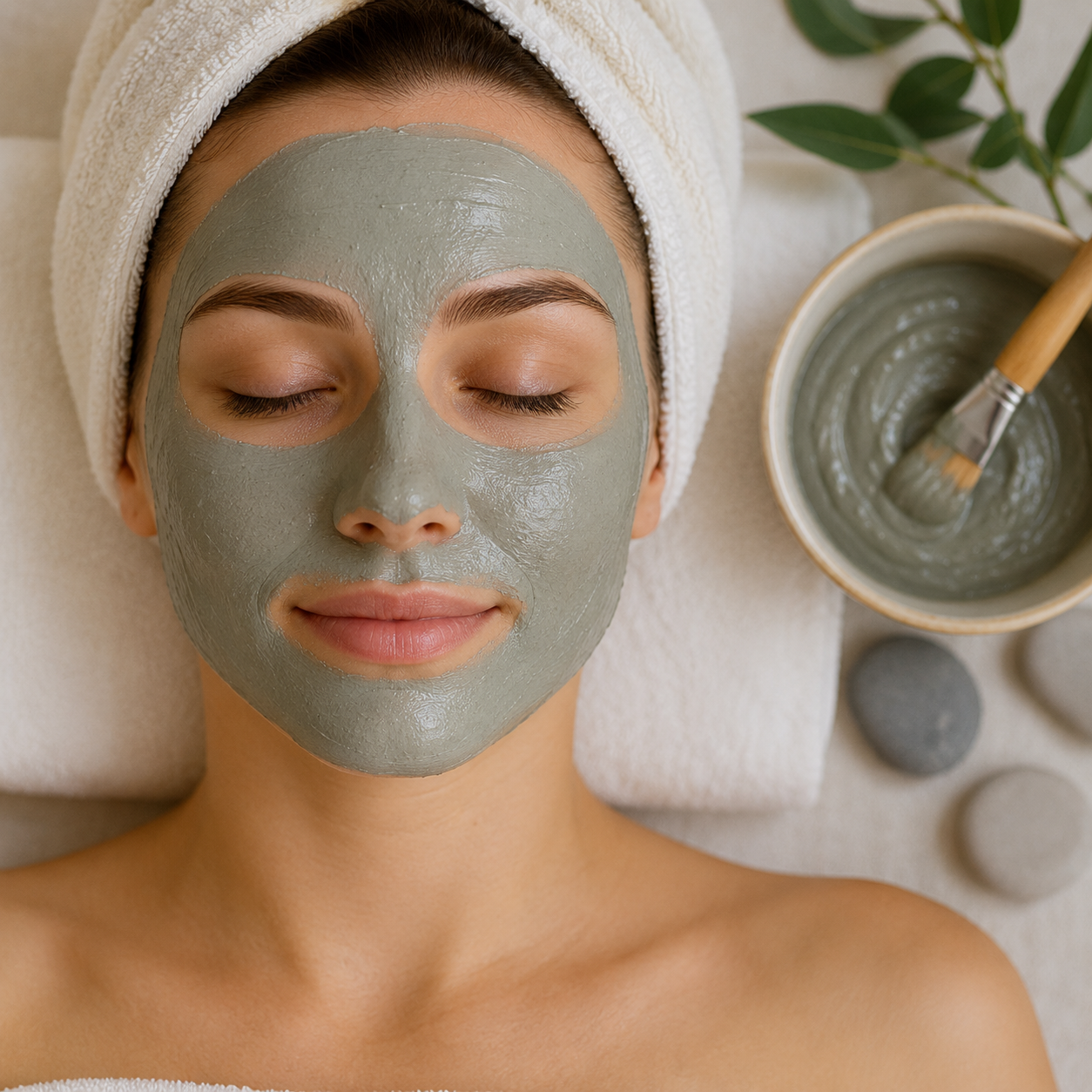
There was a time when face masks were the skincare event.
You'd cleanse, apply your favourite mask, put your phone away for 15 minutes and emerge feeling like you'd just had a mini facial. Then skincare became increasingly complicated. Serums multiplied. Actives took over our bathroom shelves. Suddenly, masking felt a little old-school.
But face masks are having a well-deserved comeback - and this time, we're being smarter about them. Instead of choosing a mask because the packaging is pretty or because it's trending on social media, the better question is:
What does my skin actually need today?
Because a mud mask, hydrating mask and exfoliating mask aren't interchangeable. They're designed to do very different things. Here's how to find your match.
First: Do Face Masks Actually Do Anything?
Yes — when you choose the right one.

Think of your everyday skincare routine as maintenance. Cleansing, moisturising and sun protection help you look after your skin consistently. A face mask is more like a targeted treatment.
Depending on the formulation, a mask can help:
- absorb excess oil
- deeply cleanse the skin
- replenish moisture
- soften and smooth
- gently exfoliate
- refresh dull-looking skin
- support a more balanced-looking complexion
And you don't necessarily need to have one "mask type." Your skin isn't exactly the same every day. It might feel oily and congested during a hot Australian summer, dry after travelling, dull after a long week or simply in need of a little extra TLC.
Choose your mask for what your skin needs now — not just the skin type written on a quiz five years ago.
If Your Skin Feels Oily or Congested: Try a Mud Mask
Let's start with the classic. Mud masks are especially useful when your skin feels oily, heavy or congested.
Mud and clay-based formulas can help absorb excess surface oil and lift away accumulated impurities, leaving the complexion feeling cleaner and refreshed. And when it comes to mud, the Dead Sea is rather difficult to ignore.
Jericho Skincare's Dead Sea Mud collection uses mineral-rich Dead Sea mud in formulas designed to cleanse pores, absorb excess oil and refresh the complexion. The mud naturally contains minerals including magnesium, calcium and potassium.
Try: Mon Platin DSM Face Mud Mask with Aloe Vera
For a classic Dead Sea mud experience, the Mon Platin DSM Face Mud Mask with Aloe Vera is based on natural Dead Sea mud and is formulated to deeply cleanse while helping balance oil levels. The addition of aloe vera makes this a particularly nice example of how modern mud masks have moved beyond the old idea that a mask needs to leave your face feeling completely stripped to have "worked."
Best for: Oily-feeling, congested or combination skin.
Mask mood: My pores need a reset.
What Are the Benefits of a Dead Sea Mud Mask?
This deserves its own moment. Dead Sea mud is naturally mineral-rich and has long been associated with bathing and skincare rituals. In facial masks, its most useful role is much more straightforward: it's an effective base for deep-cleansing and oil-absorbing treatments. Jericho's Dead Sea mud range is specifically formulated around cleansing pores, drawing away impurities and rebalancing oily-feeling skin.
But here's the important part: A good mud mask shouldn't become a competition to see how dry you can make your face. If your skin feels painfully tight afterwards, that's not a badge of honour. Choose the right formulation, follow the recommended masking time and moisturise afterwards.
If Your Skin Is Oily AND Blemish-Prone: Look for Targeted Ingredients
Oily skin doesn't automatically mean blemish-prone skin, so it's worth making the distinction.
If you're dealing with both, look beyond the words "mud mask" and examine what else is in the formula. Ingredients such as tea tree, aloe vera and other botanical additions can make a mud treatment more targeted.
Try: Juman Tea Tree Oil, Honey & Aloe Vera Purifying Facial Mud Mask
This is a particularly organic fit for this category. The Juman Purifying Facial Mud Mask combines natural Dead Sea mud with tea tree oil, honey and aloe vera and is specifically positioned for oily skin. Instead of buying the most aggressive-looking charcoal mask you can find, look for a formula that addresses oil while still considering how the skin will feel afterwards.
Best for: Oily and blemish-prone skin.
Mask mood: Clean, please — but don't punish me.
If Your Skin Feels Dry or Tight: Choose a Hydrating Mask
If your skin already feels dry, a highly absorbent clay mask probably isn't what it's asking for. It's asking for moisture.
Hydrating masks tend to contain humectants, emollients, oils or other conditioning ingredients that help the skin feel softer and more comfortable.
This is the mask to reach for when your complexion feels:
- tight after cleansing
- dry from air conditioning
- dehydrated after travelling
- rough or uncomfortable
- generally tired and thirsty
And don't confuse dry skin with dull skin. Sometimes the "glow" you're looking for doesn't require exfoliating anything at all. Your skin might simply need hydration.
Try: Black Pearl Relaxing Beauty Mask
Jericho's Black Pearl Relaxing Beauty Mask is positioned as a soothing, moisture-replenishing treatment, making it a natural option for an at-home spa routine when hydration and comfort are the priority.
Best for: Dry, dehydrated or tired-feeling skin.
Mask mood: Give me moisture and leave me alone for 15 minutes.
If Your Skin Looks Dull or Rough: Try an Exfoliating or Peeling Mask
Here's where masks become particularly satisfying. When dead surface skin builds up, the complexion can start to appear rough, uneven or simply a little lacklustre.
An exfoliating or peeling mask is designed to help remove those accumulated surface cells and reveal smoother, fresher-looking skin underneath. Jericho's own guide to peeling masks notes that these treatments can help remove dead skin cells and improve skin texture, while also warning that excessive exfoliation can irritate sensitive skin.
That's an important distinction. You want: "My skin feels incredibly smooth." Not: "Why is my face angry with me?"
Try: Black Pearl Pearl Peeling Mask
The Black Pearl Pearl Peeling Mask offers an easy route into this category and sits alongside Jericho's mud, thermal and hydrating treatments in the Masks & Exfoliators collection.
Best for: Dullness, rough texture and accumulated dead surface skin.
Mask mood: I would like my glow back.
If You Want a Deep-Cleansing Spa Experience: Try a Thermal Mask
Now we're getting into the fun stuff. A thermal mask creates a warming sensation on contact with the skin or water.
It's less of an everyday essential and more of an at-home facial experience — but that's exactly why people enjoy masks in the first place.
Try: Black Pearl Thermal Face Mask
The Black Pearl Thermal Face Mask is a self-heating treatment activated by water and formulated with ingredients including Dead Sea minerals, black pearl powder and vitamin E. According to the product directions, it is applied generously to damp skin and produces an intense warming effect before being rinsed away after approximately one to two minutes. But should not be used on problematic skin. This is one where reading the instructions really matters.
Best for: A deeper-cleansing, occasional spa-style treatment for suitable skin.
Mask mood: I can't get to the spa, so the spa is coming to me.
If Your Skin Feels Dull, Dry or Mature: Meet the Magnetic Mud Mask
Yes, magnetic face masks exist. And this might be one of the more entertaining ways to turn an ordinary Sunday-night mask into a full skincare ritual.
Try: Black Pearl Gravity Black Mud Mask
The Black Pearl Gravity Black Mud Mask combines Dead Sea mud/minerals with magnetic technology. Rather than simply rinsing everything away, the mask is designed to be removed using its magnetic system. Jericho positions it as a deep-cleansing treatment for dull, dry, tired or mature-looking skin, with nourishing plant oils incorporated into the formula. Jericho specifically states that this mask isn't recommended for acne-prone or seborrheic skin.
That's a perfect example of why choosing a mask according to your skin matters more than simply choosing the most luxurious one.
Best for: Dull, dry, tired or mature-looking skin, subject to the product guidance.
Mask mood: Make my bathroom feel expensive.
Can You Use Different Masks on Different Parts of Your Face?
Absolutely. Welcome to multi-masking. Despite the slightly dramatic name, the idea makes perfect sense. Your T-zone might be oily while your cheeks are dry. Why cover both areas with exactly the same treatment?
You could use:
Mud mask → nose, chin and forehead
Hydrating mask → drier cheek areas
Or alternate your masks throughout the week according to what your skin needs. There is no rule saying your entire face must receive exactly the same treatment at exactly the same time. Skincare should adapt to your skin, not the other way around.
How Often Should You Use a Face Mask?
There's no universal masking schedule. The correct frequency depends on the mask, its ingredients and your skin. A gentle hydrating treatment might fit into your routine more regularly, while an intensive mud, exfoliating or thermal treatment may be better used less frequently. Always start with the directions on the specific product. As a general skincare principle, resist the temptation to assume: "If once a week is good, every night must be incredible."
It doesn't work like that. Especially with deep-cleansing and exfoliating treatments.
Should You Let a Mud Mask Completely Crack and Dry?
Not necessarily. The classic image of a mud mask is a completely dry, cracked face that barely moves when you smile. But you don't need to leave every mud mask on until it resembles the surface of the desert. Follow the individual product instructions.
Leaving a mask on for longer than recommended doesn't automatically deliver additional benefits and can leave some skin types feeling unnecessarily dry or uncomfortable. Masking is skincare. It isn't a test of endurance.
What Should You Apply After a Face Mask?
Once you've rinsed or removed your mask, keep things fairly simple. A good post-mask routine might be:
1. Toner or essence
Optional, depending on your routine.
2. Hydrating or targeted serum
Choose according to what your skin needs.
3. Moisturiser
Helps maintain hydration and comfort.
4. Sunscreen
If you're masking during the day.
After an exfoliating mask in particular, be thoughtful about immediately piling several strong actives onto freshly exfoliated skin. Sometimes the smartest thing you can apply afterwards is simply hydration and moisturiser.
Face Mask Cheat Sheet: Which One Should I Choose?
| If your skin feels… | Look for… | Jericho Skincare pick |
|---|---|---|
| Oily or congested | Dead Sea mud or mineral clay | Mon Platin DSM Face Mud Mask with Aloe Vera |
| Oily + blemish-prone | Mud + targeted botanical ingredients | Juman Tea Tree Oil, Honey & Aloe Vera Purifying Mud Mask |
| Dry or dehydrated | Hydrating/conditioning mask | Black Pearl Relaxing Beauty Mask |
| Dull or rough | Peeling/exfoliating mask | Black Pearl Pearl Peeling Mask |
| In need of deep cleansing | Thermal treatment | Black Pearl Thermal Face Mask |
| Dull, dry or mature-looking | Nourishing mud treatment | Black Pearl Gravity Black Mud Mask |
| Dull, dry or mature-looking under eyes and neck | Revitalising and smoothing | Black Pearl Neck & Décolleté Mask |
Jericho's broader Masks & Exfoliators collection includes all of these categories alongside collagen and other specialised treatments, making it easy to choose by concern rather than simply by product range.

The Bottom Line: Don't Choose the Trendiest Mask. Choose YOUR Mask.
Face masks are fun. They make an ordinary skincare routine feel like a ritual. They give us an excuse to slow down. And, when they're chosen properly, they can deliver a useful targeted treatment at the same time. But the best face mask isn't necessarily the one everyone else is using.
If you're oily and congested, explore mineral-rich mud.
If you're dry, focus on hydration.
If you're dull, consider gentle exfoliation.
If different areas of your face want different things, multi-mask.
And if your skin feels perfectly happy? You don't need to create a problem just so you can mask it. The smartest skincare is still the skincare that responds to your skin.
Find Your Perfect Face Mask
From authentic Dead Sea mud masks and deep-cleansing mineral treatments to peeling, thermal, collagen and hydrating masks, Jericho Skincare Australia has a mask for practically every skincare mood.
Explore the Masks & Exfoliators collection and turn your next mask night into something your skin actually asked for.
FAQ: Choosing the Right Face Mask
What is the best face mask for oily skin?
Mud and clay masks are popular choices for oily skin because they can absorb excess surface oil and deeply cleanse. Dead Sea mud is particularly mineral-rich and forms the basis of several masks available through Jericho Skincare.
Are Dead Sea mud masks good for your skin?
Dead Sea mud contains naturally occurring minerals including magnesium, calcium and potassium. In skincare masks, Dead Sea mud is commonly used for deep cleansing, absorbing excess oil and refreshing the complexion.
Which face mask is best for dry skin?
Look for a hydrating or nourishing mask rather than an aggressively absorbent formula. Ingredients such as glycerin, hyaluronic acid, aloe vera and nourishing oils are useful ones to look for depending on the formulation.
Which mask should I use for clogged pores?
A mud or clay-based deep-cleansing mask can be a good option when excess oil and congestion are the main concerns. Choose a formula appropriate for your individual skin and follow its directions.
Are peeling masks good for dull skin?
Peeling and exfoliating masks can help remove accumulated dead surface skin and improve the appearance of texture and dullness. Avoid over-exfoliating, particularly if your skin is sensitive.
Can I use a face mask every day?
It depends on the formulation. Intensive mud, thermal and exfoliating masks aren't necessarily intended for daily use. Always follow the directions provided with the individual product.
Can I use two different face masks at once?
Yes. Multi-masking involves applying different masks to different areas — for example, a mud mask through an oily T-zone and a hydrating mask on dry cheeks.
Do I moisturise after a face mask?
In most routines, yes. After removing your mask, you can follow with your usual serum and moisturiser as appropriate for your skin and the type of treatment you've just used.
-
Posted in
Dead Sea minerals, Facial Mask, skincare