Body Skincare Routine: Why Your Face Shouldn't Get All the Attention
We cleanse our face. Exfoliate it. Apply serums. Moisturise. Protect it from the sun. Buy special masks for it. Meanwhile, the skin from our neck down often gets approximately three minutes of attention in the shower and a little body cream when we happen to remember. Your face isn't the only skin you have.
 A good body skincare routine doesn't need to involve another shelf full of products. In most cases, three simple things make the biggest difference: gentle cleansing, appropriate exfoliation and regular moisturising, with sun protection for exposed skin. And if you enjoy turning everyday skincare into a ritual, this is where Dead Sea salt, mineral body scrubs and rich body creams can really shine.
Here's how to build a body care routine that is simple enough to actually follow.
What Is a Body Skincare Routine?
A body skincare routine is simply the way you regularly cleanse, exfoliate, moisturise and protect the skin on your body. The basic routine looks like this:
Daily: Cleanse → Moisturise → Protect exposed skin from the sun
Once or several times a week, depending on your skin and product: Cleanse → Exfoliate → Moisturise
When you want a little extra: Dead Sea mineral bath → Gentle body scrub → Body cream
You don't have to do every step every day. In fact, you probably shouldn't. The goal isn't to do more to your skin. It's to give it what it needs consistently.
Why Does Body Skincare Matter?
The skin is the body's largest organ, and its outer layers help provide an important barrier between your body and the outside environment.
Just like facial skin, body skin can become:
- Dry
- Dehydrated
- Rough
- Flaky
- Sensitive
- Congested
- Sun damaged
- Dull-looking
Certain areas tend to need even more attention. Think about your elbows, knees, heels and hands. They're exposed to friction, washing, weather and everyday life, and it's hardly surprising when they start feeling rough.
Then there are the things we deliberately do to our body skin:
Shaving.
Hot showers.
Swimming.
Sun exposure.
Exfoliating.
Air conditioning.
Heating.
And, occasionally, forgetting body moisturiser exists for several months. Your skin puts up with a lot. A simple routine can help keep it feeling smooth, comfortable and moisturised.
Step 1: Cleanse Without Stripping Your Skin.
A shower is obviously where most body skincare routines begin. But there's a difference between washing your skin and trying to remove every molecule of natural oil from it. If your skin feels incredibly tight or itchy immediately after showering, your routine may be too harsh.
Choose a suitable body cleanser. Look for a body wash, shower gel or cleansing product that suits your skin type. If your body skin is dry or sensitive, you may prefer a gentler, more moisturising cleanser. If you tend to become oily or sweaty, particularly after exercise, cleansing helps remove sweat, oil and everyday debris.
Keep the water comfortable. We understand the appeal of an extremely hot shower in winter. Your skin may be less enthusiastic. Very hot water can contribute to dryness, so consider turning the temperature down if your skin regularly feels tight after showering. Warm and comfortable is enough.
Step 2: Exfoliate—but Don't Declare War on Your Skin.

Body exfoliation can be wonderfully satisfying. There's something about stepping out of the shower with incredibly smooth arms and legs that makes you wonder why you don't exfoliate every day. Please don't take that as an invitation to exfoliate every day.
Exfoliation helps remove accumulated dead surface skin cells and can improve the feel and appearance of rough, dull skin. But aggressive or excessive exfoliation can leave your skin irritated. The goal is: smooth skin, not sore skin.
Physical vs Chemical Body Exfoliation:
There are two broad approaches you'll commonly encounter.
Physical exfoliation
This uses particles or textured materials to physically loosen dead surface skin cells.
Examples include:
- Salt scrubs
- Sugar scrubs
- Exfoliating gloves
- Body brushes
- Textured body treatments
A Dead Sea salt body scrub combines physical exfoliation with the experience of mineral-rich body care.
Chemical exfoliation
These products contain exfoliating acids that help loosen dead surface skin cells without relying primarily on scrubbing.
Common ingredients include:
- Glycolic acid
- Lactic acid
- Salicylic acid
Neither approach is automatically better. It depends on your skin, the product and what you're trying to achieve. And combining an aggressive scrub, exfoliating acid and freshly shaved skin all at once isn't necessarily an efficiency hack. Sometimes it's simply irritation with excellent time management.
How Often Should You Exfoliate Your Body?
There's no perfect number that works for everyone. The appropriate frequency depends on:
- Your skin type
- The type of exfoliant
- Its strength
- The area of the body
- How your skin responds
For many people, occasional exfoliation is enough to maintain smooth-feeling skin. Always follow the instructions for the individual product. More importantly, pay attention to your skin. If it becomes red, sore, unusually sensitive or persistently dry, give exfoliation a break.
What Are the Benefits of a Dead Sea Salt Scrub?
Dead Sea salt scrubs are particularly popular in mineral body care because they combine physical exfoliation with Dead Sea mineral salts.
A salt scrub can help:
- Remove dead surface skin cells
- Smooth rough-feeling areas
- Leave skin feeling polished
- Prepare skin for body moisturiser
- Turn an ordinary shower into more of a spa ritual
Dead Sea salts contain minerals including magnesium, calcium and potassium, although the overall performance of any scrub depends on its complete formulation—not simply the presence of salt. A well-formulated body scrub may also contain oils or other conditioning ingredients that leave the skin feeling softer after rinsing.
Where should you use a salt scrub?
Body scrubs can be particularly useful on areas prone to roughness, such as: Elbows → knees → legs → arms → feet. Be gentler on more delicate areas.
And unless a product specifically says it is suitable for facial use, keep a body salt scrub away from your face. Facial skin and body skin don't necessarily appreciate the same treatment.
Step 3: Moisturise While Your Skin Is Still Fresh From the Shower.
If there's one body skincare habit worth developing, it's this one. Moisturise consistently.
Body moisturisers help hydrate the skin and reduce moisture loss, keeping it feeling softer and more comfortable. A particularly convenient time to apply one is after showering or bathing, once you've gently towel-dried your skin. Don't scrub yourself dry as though the towel has personally offended you. Pat your skin dry and apply your moisturiser.
Body Lotion, Body Cream or Body Butter?
They all moisturise, but the textures can feel quite different.
Body lotion:
Usually lighter and easier to spread. A lotion can be ideal if you:
- Don't like heavy textures
- Need quick absorption
- Want an everyday summer moisturiser
- Have relatively normal skin
Body cream:
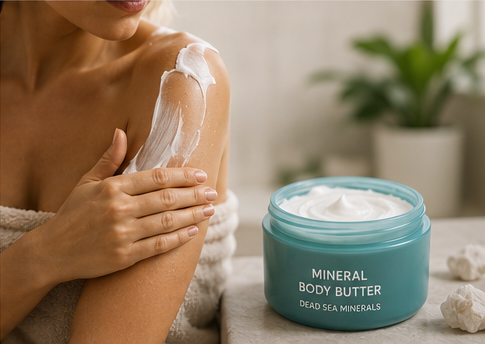
Usually richer than lotion and can be particularly comfortable for dry or dehydrated-feeling skin. Creams are excellent for everyday use when your skin needs more nourishment.
Body butter:
Typically the richest of the three. Body butters can be particularly satisfying on very dry-feeling areas such as:
- Elbows
- Knees
- Legs
- Heels
- Hands
They're also wonderful when you want that luxurious, enveloping moisturised feeling after a bath. Which one should you choose? The one you'll actually use. A theoretically perfect body cream sitting untouched in the cupboard isn't helping anyone.
Step 4: Give Extra Attention to Dry Areas.
Not every part of your body needs exactly the same amount of moisturiser. Your elbows may need more than your shoulders. Your heels may need considerably more than your stomach.
Instead of covering your entire body with an extremely rich product because one area is dry, you can layer your routine strategically. For example:
Whole body: lightweight body lotion
Dry areas: richer cream or body butter
This is particularly useful during Australian winter when legs, hands and elbows can suddenly decide they've relocated to a desert.
Step 5: Don't Forget Your Hands.
Hands deserve their own paragraph. We wash them constantly. We expose them to cleaning products, hand sanitiser, sun, wind and cold weather. And then we're surprised when they become dry.
Keep a hand cream somewhere you'll actually see it:
- Beside your sink
- On your desk
- In your handbag
- Beside your bed
Apply it when your hands feel dry, particularly after frequent washing. Your hands are part of your skincare routine too.
Step 6: Protect Exposed Body Skin From the Sun.
Skincare doesn't stop at your jawline. Your: neck, décolletage, shoulders, arms, hands and legs can all receive significant UV exposure. In Australia, sun protection deserves particular attention. Follow current Australian sun-protection guidance and use an appropriate broad-spectrum sunscreen on exposed skin according to its directions.
And remember areas that are easy to miss, including:
- Ears
- Neck
- Upper chest
- Backs of hands
- Tops of feet
You can have the world's most elaborate body skincare routine, but protecting your skin from excessive UV exposure remains fundamental.
Where Do Dead Sea Bath Salts Fit Into a Body Routine?
This is the enjoyable part. Dead Sea bath salts aren't something you need to use every day. They're a ritual.
Add them to a warm bath according to the product directions and allow yourself some time to actually enjoy it.

Research has investigated magnesium-rich Dead Sea salt solutions for their effects on dry skin. In one clinical study involving people with atopic dry skin, bathing in a 5% Dead Sea salt solution was associated with improvements in skin hydration and roughness, among other measured parameters. (https://pubmed.ncbi.nlm.nih.gov/15689218/)
That doesn't mean a Dead Sea salt bath is a cure for a skin condition. But it does make the centuries-old tradition of mineral bathing rather more interesting than simply saying: "Salt baths feel nice."
A simple Dead Sea bath ritual:
Try: Warm bath > Dead Sea mineral bath salts > Relax > Rinse if directed > Gently towel dry > Apply body cream or body butter
That's a very simple way to combine mineral bathing with moisturising body care.
Should You Scrub Before or After a Dead Sea Salt Bath?
You generally don't need to subject your skin to every treatment simultaneously. If you're using a mineral bath and a salt scrub in the same routine, follow the directions on each product and keep your skin's tolerance in mind.
A practical spa-style routine might be: Cleanse → soak → gentle exfoliation → rinse → moisturise. But if your skin is sensitive or already dry, you may prefer to separate your exfoliation and mineral bath days. Your skin doesn't know it's "spa night." If it's irritated, it's irritated.
What About Body Skincare for Dry Skin?
If your body skin is constantly dry, simplify your routine around gentle cleansing and regular moisturising. Try:
Morning: Moisturise dry areas → sunscreen on exposed skin
Evening: Warm shower → gentle body cleanser → body cream or butter
Occasionally
Gentle body scrub or mineral bath. Look for moisturising products containing ingredients such as:
- Glycerin
- Shea butter
- Squalane
- Plant oils
- Hyaluronic acid
- Ceramides
And consider reducing very hot showers if they leave your skin feeling uncomfortable.
Body Skincare for Rough or Dull Skin
If your main concern is rough texture, exfoliation can become more important.
Try: Cleanse → exfoliate appropriately → rinse → moisturise
A Dead Sea salt scrub can be a particularly enjoyable option for areas such as the legs, arms, elbows and knees. The moisturising step afterwards matters.
Removing dead surface skin cells and then forgetting to moisturise is like washing your hair and deciding conditioner is somebody else's problem.
Body Skincare for Sensitive Skin
Sensitive skin needs a little less enthusiasm. Choose gentle cleansing products and introduce exfoliation cautiously. Patch testing new products can be helpful, particularly if you're prone to reactions.
Avoid applying salt scrubs to:
- Broken skin
- Irritated skin
- Freshly shaved areas
- Areas experiencing significant redness
If a product causes persistent burning, redness or discomfort, stop using it. "Beauty is pain" is not a skincare philosophy we recommend.
Should You Use Body Scrub Before or After Shaving?
Usually, it's better not to aggressively exfoliate immediately after shaving. Both shaving and physical exfoliation interact with the surface of your skin, so combining them too aggressively can contribute to irritation.
Some people prefer gentle exfoliation before shaving, but your individual skin tolerance matters. If you're prone to razor irritation, consider separating shaving and intensive exfoliation rather than squeezing everything into one shower.
Can Body Skincare Help With Ageing Skin?
Body skin changes with age too. Over time, you may notice:
- Increased dryness
- Changes in texture
- Reduced firmness
- Fine lines
- Uneven-looking pigmentation
Regular moisturising can help keep skin feeling soft and improve the appearance of dryness, while sun protection helps reduce further UV-related skin damage. And don't stop your facial routine precisely at your jaw. Your neck, décolletage and hands are frequently exposed and deserve attention as well.
Your Weekly Body Skincare Routine.
If you're wondering how all of this fits together, here's an easy example.
Every day:
Shower → body moisturiser → sunscreen on exposed skin
1–2 times per week, if suitable for your skin:
Cleanse → body scrub → moisturiser
Once a week or whenever you want to unwind:
Dead Sea mineral bath → body cream or butter
That's it. You don't need a 14-step body routine. You need a routine you enjoy enough to repeat.
Common Body Skincare Mistakes.
Scrubbing harder because your skin is rough.
More pressure doesn't necessarily mean smoother skin. Be gentle.
Using extremely hot water every day:
If your skin constantly feels dry after showering, the temperature may be part of the problem.
Moisturising only when your skin becomes visibly flaky:
Consistency works better than emergency moisturising.
Forgetting sunscreen below your face:
Your neck, chest, arms and hands see the sun too.
Exfoliating freshly irritated skin:
Give your skin time to settle.
Assuming natural means non-irritating:
Salt, essential oils, botanical extracts and other natural ingredients can still irritate some people's skin. Choose products for your skin—not because the ingredient sounds beautiful.
Frequently Asked Questions About Body Skincare
What is a good body skincare routine?
A simple body skincare routine includes gentle cleansing, regular moisturising and sun protection for exposed skin. You can add exfoliation, body scrubs or mineral baths according to your skin type and needs.
How often should I exfoliate my body?
It depends on your skin and the exfoliating product. Start conservatively and follow the product directions. If your skin becomes irritated, sore or unusually dry, reduce the frequency.
Are Dead Sea salt scrubs good for skin?
Dead Sea salt scrubs provide physical exfoliation and can help leave rough body skin feeling smoother. The complete formulation matters, so choose a product appropriate for your skin and avoid using it on irritated or broken skin.
What does Dead Sea salt do for skin?
Dead Sea salt contains minerals including magnesium. Clinical research using magnesium-rich Dead Sea salt solutions has investigated potential effects on skin hydration, barrier function and roughness. (pubmed.ncbi.nlm.nih.gov)
Should I use body cream every day?
Daily moisturising can be particularly useful if your skin tends to feel dry. Apply your body moisturiser according to the product instructions and whenever your skin needs additional moisture.
Should body scrub be used before or after body wash?
This depends on the individual product. Generally, cleansing first gives you clean skin to work with, followed by exfoliation and then moisturising. Always follow the directions on your scrub.
What's the difference between body scrub and bath salts?
A body scrub is applied directly to the skin and physically exfoliates dead surface skin cells. Bath salts dissolve into bath water and are used for soaking. Dead Sea mineral skincare can include both.
Can I use Dead Sea salt scrub on my face?
Don't use a body scrub on your face unless the product specifically states that it is suitable for facial use. Facial skin may require a gentler formulation.
When is the best time to apply body moisturiser?
After bathing or showering is a convenient time. Gently dry your skin and apply your body cream, lotion or butter while your skin still feels fresh and comfortable.
Your Face Doesn't Have to Get All the Good Skincare.
A good body skincare routine isn't about adding another complicated beauty regime to your life. It's about remembering that the rest of your skin deserves some attention too.
Start simply: Cleanse gently. Exfoliate when needed. Moisturise regularly. Protect exposed skin from the sun.
Then make it enjoyable. A scoop of Dead Sea bath salts can turn an ordinary bath into a mineral soak. A Dead Sea salt scrub can transform a rushed shower into a proper body treatment. And a rich body cream or body butter can leave freshly washed skin feeling soft, smooth and cared for.
You don't need to do everything every day. Sometimes the best body care routine is simply the one that makes you stop for ten minutes, take care of your skin and actually enjoy doing it. After all, great skincare shouldn't end at your chin.