Are You Using Too Many Skincare Actives? 7 Signs Your Skin Needs a Break
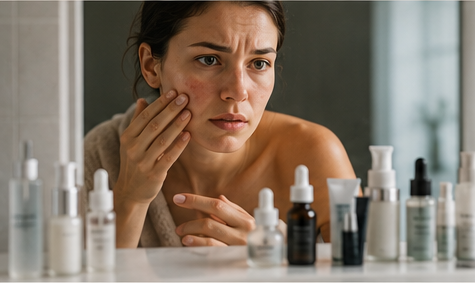
Retinol at night. Vitamin C in the morning. An exfoliating acid twice a week. A brightening serum. A pore treatment. A resurfacing mask. A new “miracle” active you saw online three days ago.
At some point, skincare can stop feeling like self-care and start feeling like a chemistry experiment. And while active ingredients can be incredibly useful, more is not always better. Using too many skincare actives - especially when they’re layered, combined too often or introduced too quickly - can leave your skin feeling dry, tight, red, flaky, sensitive or simply overwhelmed.

If your skin suddenly seems less happy despite using more products than ever, it may be time for a break. Here are 7 signs you may be overdoing your skincare actives, plus how to simplify your routine and help your skin feel comfortable again.
What Are Skincare Actives?
“Active” is a broad term often used to describe ingredients that target a particular skin concern. Common skincare actives include:
- Retinol and other retinoids
- Vitamin C
- Glycolic acid
- Lactic acid
- Salicylic acid
- Azelaic acid
- Niacinamide
- Peptides
- Benzoyl peroxide
- Exfoliating enzymes
Some are gentle. Some are powerful. Some work beautifully together. Others can become irritating when you use them too frequently or pile several into the same routine. The issue usually isn’t that active ingredients are bad. The issue is how much, how often and in what combination you’re using them.
Can You Use Too Many Skincare Actives?
Yes. Your skin has limits. You can absolutely use several effective products and still end up with skin that looks worse because your routine has become too aggressive.
This tends to happen when people:
-
Introduce several new products at once
-
Layer multiple exfoliating ingredients
-
Use retinoids too frequently
-
Exfoliate while the skin is already irritated
-
Combine strong actives without understanding their effects
-
Mistake tingling or peeling for proof that a product is working
-
Keep adding products instead of simplifying
One of the easiest skincare traps is believing: “If one active gives results, five actives must give faster results.” Unfortunately, skin doesn’t usually operate like that.
1. Your Skin Suddenly Stings
You apply a moisturiser you’ve used for months and suddenly it burns. That’s worth paying attention to. When your skin becomes irritated or its barrier is compromised, even products that previously felt perfectly comfortable may begin to sting.
You might notice this when applying:
- Moisturiser
- Serum
- Sunscreen
- Cleanser
- Makeup
If everything suddenly stings, the answer probably isn’t to add another serum. Your skin may simply need less.
2. Your Skin Feels Tight After Cleansing
A tight, squeaky-clean feeling is often treated like proof that your cleanser has done a good job. It isn’t necessarily. If your skin feels uncomfortable immediately after washing, especially when you’re also using exfoliating acids or retinoids, your routine may be removing more than your skin can handle.
Cleansing should leave your face feeling clean but comfortable. If you’re rushing to moisturise because your face feels like it’s shrinking, that’s a clue.
3. You’re Suddenly Dry and Flaky
Flaking is one of the clearest signs that your routine may be too intense. This is particularly common when people combine or overuse:
- Retinoids
- AHAs
- BHAs
- Strong exfoliating masks
- Scrubs
A little temporary dryness can happen when introducing certain actives. But ongoing flaking, peeling and roughness are not something you need to “push through” indefinitely. Your skin doesn’t need to shed like a snake to prove your products are working.
4. Your Skin Has Become Red or Irritated
If your complexion is consistently red, blotchy or irritated, take a look at the number of strong products you’re using. You may be using:
Vitamin C → exfoliating acid → retinol → peel → repeat with almost no recovery time.
Skin benefits from effective ingredients. It also benefits from not being constantly challenged. Persistent redness can have many causes, so if it doesn’t improve or is severe, seek professional advice rather than assuming skincare actives are the only explanation.
5. You’re Getting More Breakouts After Adding More Products
This one is confusing. You add extra products because you’re trying to improve your skin. Then suddenly you get more congestion or breakouts. So you add another acne product. Then another exfoliant. And before long, you’re treating irritation with even more irritation. Not every breakout after starting a new product is “purging.”
Sometimes your skin simply doesn’t like the product. Sometimes the formulation is too heavy. Sometimes your barrier is irritated. And sometimes your routine has become so complicated that it’s impossible to work out what is causing what.
If your skin keeps getting worse while your routine keeps getting bigger, simplifying it can help you identify the real problem.
6. Your Skin Feels Sensitive to Everything
Has your skin become unusually reactive? Wind feels uncomfortable. Hot water stings. Your normal moisturiser burns. Shaving irritates more than usual. Even products labelled “gentle” suddenly feel intense. That increased sensitivity can be a sign that your skin barrier is under stress. If that happens, this is usually not the time to introduce another active ingredient.
Your skin may benefit from a routine focused on gentle cleansing, hydration and moisturising instead.
7. Your Skin Looks Dull Even Though You’re Exfoliating More
This feels unfair, but it happens. You exfoliate because your skin looks dull. Then it still looks dull. So you exfoliate more. Eventually, instead of glowing, your skin may look:
- Dry
- Rough
- Red
- Uneven
- Tired
Healthy-looking skin needs an intact, comfortable surface. If you keep stripping and resurfacing it without enough recovery, you may end up moving further away from the glow you were chasing. Sometimes the best glow-enhancing step is simply: stop exfoliating for a while.
What Happens When You Overuse Skincare Actives?

Too many strong products can contribute to disruption of the skin barrier. Your skin barrier helps reduce water loss and protect your skin from environmental stressors.
When it isn’t functioning well, you may experience:
- Dryness
- Tightness
- Flaking
- Increased sensitivity
- Roughness
- Stinging
- Redness
This is why a damaged or stressed skin barrier often feels like your entire skincare routine has suddenly stopped working. The problem may not be that your products are ineffective.
You may simply be asking too much of your skin.
Which Active Ingredients Are Most Likely to Cause Problems?
Any ingredient can potentially cause irritation for some people, but stronger actives deserve extra respect.
Retinoids
Retinol and other retinoids are widely used to target signs of ageing, texture and acne. They can also cause:
- Dryness
- Flaking
- Irritation
especially when introduced too quickly.
AHAs
Alpha hydroxy acids such as glycolic acid and lactic acid exfoliate the surface of the skin. Used appropriately, they can improve texture and radiance. Used too often, they can leave skin irritated.
BHAs
Salicylic acid is popular for oily and congestion-prone skin. But more salicylic acid doesn't automatically mean fewer breakouts. If your skin becomes dry and sore, rethink the frequency.
Vitamin C
Vitamin C is a favourite for brightening and antioxidant skincare. Some formulations, particularly lower-pH types, can irritate already sensitive skin.
Benzoyl Peroxide
Useful in acne care, but it can also be drying or irritating, especially when combined with other strong products.
The important thing is not to fear actives. It’s to use them intelligently.
Are Some Active Ingredients Safe to Combine?
Yes. But whether a combination works for you depends on:
- Concentration
- Formulation
- Frequency
- Skin type
- Existing sensitivity
- How long you've been using each product
For example, some people comfortably use vitamin C in the morning and retinol at night. Others may find the combination too much at first.
Instead of asking: “Can these ingredients technically be used together?” A better question is: “Can my skin tolerate this combination at this frequency?” That answer is much more individual.
What Should You Do If You’re Using Too Many Actives?

If your skin is clearly irritated, simplify. Not forever. Just long enough to let your skin settle. A basic routine can look like this:
Morning: Gentle cleanser → moisturiser → broad-spectrum sunscreen
Evening: Gentle cleanser → moisturiser
That's it.
Boring? Maybe.
Useful? Very often, yes.
Should You Stop All Active Ingredients?
If your skin is significantly irritated, it may be sensible to temporarily reduce or pause potentially irritating actives.
That might include:
- Retinol
- Exfoliating acids
- Scrubs
- Peels
- Strong acne treatments
Once your skin feels comfortable again, you can gradually reintroduce products one at a time. If you’re using a prescription treatment, follow the advice of your doctor rather than stopping it based on general skincare information.
How Long Should You Give Your Skin a Break?
There isn’t one perfect timeline. The answer depends on how irritated your skin is and what caused the problem. Instead of counting days, look for signs that your skin is returning to normal:
-
Less stinging
-
Less redness
-
Reduced flaking
-
Improved comfort
-
Less tightness
-
Better tolerance of basic skincare
Then reintroduce actives slowly. One at a time. Not three new serums on the same Sunday night.
How to Reintroduce Skincare Actives Without Overdoing It.
Once your skin has settled, resist the temptation to immediately rebuild your old routine. Try this instead.
Start with one active
Choose the product most relevant to your main skin concern.
Use it less frequently
You may not need daily use.
Start slowly and increase frequency only if your skin tolerates it.
Give it time
Don't add another product three days later because nothing dramatic has happened yet. Many skincare ingredients need consistent use over time.
Watch how your skin responds
If you notice persistent stinging, dryness or redness, reduce the frequency.
Add the next product only when your routine feels stable
This gives you a much clearer idea of which products are working—and which aren't.
Do You Really Need Multiple Serums?
Not necessarily. Skincare marketing has become very good at convincing us that every ingredient needs its own bottle. But a single well-formulated product can contain several useful ingredients. For example, one moisturising serum might include:
-
Hyaluronic acid
-
Glycerin
-
Niacinamide
-
Peptides
You don't necessarily need four separate serums just because each ingredient has its own trending hashtag. Sometimes fewer, better-chosen products make much more sense.
Where Does Gentle Mineral Skincare Fit In?
When your skin feels overwhelmed, you may want to move away from aggressive resurfacing and focus more on hydration, comfort and simple skincare. This is where gentle mineral skincare can fit naturally into the routine. Dead Sea mineral products are often found in:
- Moisturisers
- Cleansers
- Masks
- Body products
- Bath treatments
Dead Sea salts contain minerals including magnesium, calcium and potassium. But remember: minerals aren't an excuse to keep over-treating your skin.
If you're choosing a mineral product during a skin reset, pay attention to the complete formulation and choose something appropriate for sensitive or dry-feeling skin. A mineral-rich moisturiser can make sense. A powerful exfoliating mineral scrub on already irritated facial skin?
Probably not the moment.
Can You Use Dead Sea Mud When Your Skin Is Irritated?
It depends on your skin and the specific mask. Dead Sea mud masks can be wonderful for cleansing and smoothing the skin, particularly if you're oily or combination.
But if your face is currently:
- Stinging
- Peeling
- Red
- Extremely dry
- Highly sensitive
you may want to give intensive masks a break. Skincare should respond to your skin's current condition—not your normal routine. You can come back to your favourite treatments once everything feels comfortable again.
What About Exfoliating Scrubs?
Physical exfoliation is another area where “more” can quickly become “too much.” If you're already using:
- Retinol
- Glycolic acid
- Salicylic acid
you may not need an aggressive scrub on top.
And if your skin is already flaky from actives, scrubbing those flakes away can sometimes make the irritation worse. Wait. Moisturise. Let your skin recover. Then reintroduce exfoliation carefully.
A Simple Skin Reset Routine
If your bathroom shelf has become intimidating, try this for a while.
Morning:
Gentle cleanser - Use lukewarm water and avoid over-cleansing.
Moisturiser - Choose something comfortable and hydrating.
Broad-spectrum sunscreen -Especially important if you've recently been using exfoliating acids or retinoids.
Evening:
Gentle cleanser - Remove sunscreen, makeup and everyday debris.
Hydrating serum, optional - Only if it's gentle and your skin tolerates it well.
Moisturiser - Focus on hydration and barrier support.
No complicated rotation. No “acid night.” No “peel night.” No surprise resurfacing mask. Just simple skincare.
Signs Your Skin Is Ready for Actives Again
You don't need a calendar reminder. Watch your skin. It may be ready when:
-
Cleansing feels comfortable
-
Moisturiser no longer stings
-
Flaking has stopped
-
Redness has reduced
-
Skin feels less reactive
-
Texture feels more normal
Then slowly add back the product you actually need.
How Many Active Ingredients Should You Use?
There is no magic number. Some people happily use several actives. Others do best with one or two. A much better rule is:
Every product in your routine should have a reason to be there. Ask yourself:
- What does this product do?
- What skin concern am I using it for?
- Am I already using something that does the same thing?
- Do I actually see a benefit?
- Does my skin tolerate it?
If you can't answer those questions, you may not need the product.
Skincare Actives vs Skin Barrier: Finding the Balance
Actives and barrier care aren't enemies. You can absolutely use retinol, exfoliating acids, vitamin C and other targeted ingredients while maintaining healthy-looking skin. The goal is balance.
Think of your routine as two sides:
Target:
Use actives to address specific concerns.
Support:
Use gentle cleansing, moisturising and sun protection to maintain the skin barrier.
If you only target and never support, irritation becomes much more likely.
Common Skincare Active Mistakes
Introducing everything at once
If your skin reacts, you'll have no idea which product caused it.
Using exfoliating products every day because they feel effective
Your skin doesn't need to feel polished every morning.
Thinking peeling means progress
It can simply mean irritation.
Copying someone else's routine exactly
Their skin isn't your skin.
Using strong actives immediately after shaving
Freshly shaved skin can already be sensitive.
Ignoring sunscreen
Some actives can make good sun protection even more important.
Assuming expensive means gentle
Price tells you surprisingly little about how your skin will react.
Frequently Asked Questions About Too Many Skincare Actives.
How do I know if I'm using too many skincare actives?
Common signs include persistent dryness, stinging, redness, flaking, increased sensitivity and skin that suddenly reacts to products it previously tolerated.
Can too many skincare products damage your skin barrier?
Using too many irritating or exfoliating products too frequently can contribute to barrier disruption, particularly if your skin doesn't have enough time to recover.
Should I stop skincare actives if my skin is irritated?
If your skin is clearly irritated, consider simplifying your routine and temporarily reducing potentially irritating products. If you're using prescription skincare, follow advice from your healthcare professional.
Can too much retinol damage your skin?
Using retinol more frequently than your skin tolerates can cause dryness, peeling and irritation. Start gradually and adjust according to your skin.
Can I use retinol and exfoliating acids together?
Some people can tolerate them in the same overall routine, but others find the combination too irritating. Introduce them carefully and avoid increasing frequency too quickly.
How long does it take for irritated skin to recover?
There is no universal timeline. Mild irritation may improve relatively quickly after removing the trigger, while more significant barrier disruption can take longer.
Should I exfoliate flaky skin caused by retinol?
If your skin is already irritated and flaking, more exfoliation may make things worse. Focus on gentle skincare and allow your skin time to recover.
Can gentle mineral skincare be used during a skin reset?
Yes, provided the product is formulated appropriately for your skin. Look for gentle, hydrating mineral skincare rather than intensive scrubs or highly active treatments.
Sometimes Better Skincare Means Using Less
It's easy to get caught up in the idea that your skin always needs another ingredient. A stronger serum. A new acid. A more intense peel. A better retinol.
But skin doesn't improve simply because your routine becomes more complicated. Sometimes the best thing you can do is remove a few steps. Give your skin room to recover. Use a gentle cleanser. Moisturise. Protect it from the sun.
Then add your actives back thoughtfully, one at a time. Because the goal of skincare isn't to use the most products. It's to have skin that looks and feels healthy, comfortable and cared for.
And if your skin is telling you it has had enough? It might be worth listening.