Peptides vs Retinol: Which Is Better for Your Skin?
Peptides or retinol?
If you're shopping for anti-ageing skincare, you've probably encountered both. One serum promises peptides for firmer, smoother-looking skin. Another tells you retinol is the ingredient you need for wrinkles.
So which one should actually go in your routine?

Here's the simple answer: Retinol is generally the stronger choice if your priority is
targeting visible signs of photo-ageing, including fine lines, uneven texture and pigmentation. Peptides can be an appealing, gentler option for supporting smoother, firmer and more hydrated-looking skin, particularly if your skin doesn't tolerate retinol well.
And here's the part skincare marketing sometimes forgets to mention: You don't necessarily have to choose. Peptides and retinol aren't natural enemies. Depending on the formulations and your skin tolerance, they can potentially live quite happily in the same skincare routine.
Let's compare them properly.
Peptides vs Retinol: The Quick Comparison
| Peptides | Retinol | |
|---|---|---|
| What are they? | Short chains of amino acids | A vitamin A derivative and type of retinoid |
| Best known for | Supporting firmer, smoother, hydrated-looking skin | Fine lines, wrinkles, texture and uneven pigmentation |
| Evidence for photoageing | Promising but more limited | Strong |
| Irritation potential | Generally low, depending on formula | Can cause dryness, peeling and irritation |
| Sensitive skin | Often easier to introduce | Requires more caution |
| When to use | Depends on formulation; often AM or PM | Usually introduced into an evening routine |
| Can they be used together? | Yes, depending on formulation and tolerance | Yes |
| Beginner friendly? | Generally yes | Yes, but start gradually |
Now let's get into what they're actually doing.
What Are Peptides in Skincare?
The word peptide sounds wonderfully scientific, but the basic idea isn't difficult.
Peptides are short chains of amino acids.
Amino acids are the building blocks used to make proteins, including proteins that are important to the structure of skin. Different peptides are used in cosmetics for different purposes, which is why saying a product "contains peptides" doesn't actually tell you everything you need to know about it.
Think of it a little like saying: "This meal contains vegetables."
Great! Which vegetables? How much? And what else is on the plate?
The same applies to peptide skincare.
What Do Peptides Do for Skin?
Peptides have become popular in anti-ageing formulas designed to improve the appearance of:
- Fine lines
- Loss of firmness
- Dryness
- Uneven texture
- Ageing skin
Some peptides are used in formulations intended to support the appearance of collagen-rich, firmer skin, while others may be included for conditioning or hydration. Research into peptides and skin ageing is encouraging, but it needs perspective.
A 2026 systematic review and meta-analysis examining oral and topical peptides found improvements in some skin-ageing measures, including hydration and brightness, and a modest pooled effect on wrinkles. However, much of the wrinkle benefit was driven by oral peptide studies, while results for elasticity and density were inconsistent. The researchers concluded that larger and better-standardised trials are still needed.
So peptides are interesting. But we shouldn't turn "promising" into "proven miracle."
What Is Retinol?
Retinol belongs to the retinoid family, which consists of vitamin A derivatives. This is where terminology can become confusing because you'll see:
- Retinol
- Retinal or retinaldehyde
- Retinyl esters
- Tretinoin
- Adapalene
- Tazarotene
They're related, but they're not identical. Retinol is widely used in cosmetic skincare, while tretinoin is a prescription retinoid and is considered a gold-standard topical treatment for photoageing. Reviews of cosmetic retinoids also support benefits from ingredients such as retinol and retinaldehyde, although their potency, stability and tolerability differ.
What Does Retinol Do for Your Skin?
Retinoids influence processes involved in skin-cell behaviour and remodelling. In practical skincare terms, retinoids are particularly associated with improvements in the appearance of:
- Fine lines
- Wrinkles
- Uneven texture
- Uneven pigmentation
- Photoaged skin
Retinoids have been shown to affect collagen and other structural components of photoaged skin, and they remain among the best-supported topical interventions for visible photoageing.
That's the major difference in the peptides vs retinol debate. Retinol isn't simply popular because somebody made a viral video about it. The retinoid family has decades of research behind it.
So, Are Peptides or Retinol Better for Wrinkles?
If we're asking purely about the strength of the evidence for visible photoageing:
Retinoids win.
Recent reviews continue to identify retinoids as the most consistently supported topical intervention for photoaged skin.
That doesn't make peptides useless. It means they're different.
Peptides may be an attractive addition to an anti-ageing routine, particularly when you're looking for a product that's comfortable to use consistently. And consistency matters enormously. The theoretically strongest ingredient isn't particularly useful if your skin becomes so irritated that you stop using it.
Peptides vs Retinol for Sensitive Skin
This is where peptides become especially interesting. Retinoids can cause:
- Dryness
- Redness
- Peeling
- Burning or stinging
- Irritation
particularly when first introduced or when used too aggressively.
Peptide products are often formulated as gentler serums and creams and may therefore be easier to incorporate into a sensitive-skin routine. But don't assume every peptide product is automatically suitable for sensitive skin. Your skin reacts to the whole formula, not the headline ingredient. A peptide serum containing something else you don't tolerate can still irritate you.
Winner for sensitive skin?
Peptides are generally the easier starting point. If you have significant sensitivity, redness or an existing skin condition, get professional advice before introducing stronger actives.
Peptides vs Retinol for Dry Skin
Dry skin presents a similar dilemma. Retinol can be very useful, but it can also make already-dry skin feel even drier when introduced too quickly.
A peptide serum or cream formulated with moisturising ingredients can be considerably easier to use. Look for supporting ingredients such as:
- Hyaluronic acid
- Glycerin
- Ceramides
- Squalane
- Nourishing oils
If you have dry skin and still want to use retinol, you don't necessarily have to abandon the idea. Start gradually and pay attention to moisturising and barrier support. Retinol doesn't need to be a test of endurance.
Peptides vs Retinol for Mature Skin
Why choose? Mature skin often has several concerns happening simultaneously:
- Fine lines
- Wrinkles
- Dryness
- Loss of firmness
- Uneven texture
- Uneven pigmentation
Retinol and peptides approach these concerns differently. Retinol brings the stronger evidence base for photoageing. Peptides can complement a routine focused on hydration, firmness and maintaining comfortable-feeling skin.
For many people, the better question isn't: "Peptides OR retinol?"
It's: "How can I build an anti-ageing routine that uses effective ingredients without overwhelming my skin?"
That's a much smarter conversation.
Peptides vs Retinol for Fine Lines
If fine lines are your main concern, retinol has the stronger track record. A systematic review of topical tretinoin trials found consistent improvements in several clinical signs of photoageing, while broader research on cosmetic retinoids supports the use of retinol and related vitamin A derivatives for photoaged skin.
Peptides can still have a place—particularly in moisturising anti-ageing serums and creams. Just don't expect a peptide moisturiser to automatically behave like a retinoid. They're different ingredients.
Peptides vs Retinol for Skin Firmness
This is one area where peptides are particularly popular. Peptide skincare is frequently formulated to target the appearance of firmness and elasticity because certain peptides are intended to interact with pathways associated with skin's extracellular matrix.
However, the clinical evidence is less established than it is for retinoids. The 2026 systematic review found some positive results from peptide interventions but inconsistent findings for elasticity and skin density.
In other words: Promising? Yes. Case closed? No.
Peptides vs Retinol for Dark Spots and Uneven Skin Tone
Retinoids have another advantage here. Retinol and other retinoids are commonly used in routines targeting uneven pigmentation and photoageing. The American Academy of Dermatology notes that retinol can be used to improve uneven skin tone, pigmentation and texture.
That makes retinol the more obvious choice when your anti-ageing concerns include both fine lines and sun-related uneven pigmentation.
But remember what comes next. Sunscreen.
There's little point obsessing over pigmentation-correcting skincare while ignoring ongoing UV exposure.
What Are the Disadvantages of Retinol?
Retinol's biggest strength is also its biggest problem. It's active enough to produce meaningful changes—but that also means it can be irritating. The familiar "retinol uglies" people talk about online can include:
- Dryness
- Flaking
- Redness
- Sensitivity
- Irritation
That doesn't mean everyone will experience them. It also doesn't mean you should accept severe irritation as proof that your retinol is working. If your face is burning, your skincare routine doesn't deserve a medal for effort.
What Are the Disadvantages of Peptides?
Peptides have almost the opposite problem. They're generally attractive because they're relatively easy to incorporate into skincare, but the evidence varies considerably depending on the peptide and formulation.
"Peptide complex" on the front of a bottle doesn't tell you:
- Which peptides are present
- At what concentrations
- Whether the formula effectively delivers them
- Whether that particular formulation has been clinically tested
This is why product formulation matters so much. Don't shop by buzzword alone.
Can You Use Peptides and Retinol Together?
For many people, yes. There isn't a general rule saying peptides and retinol must be kept apart. In fact, the combination makes conceptual sense:
Retinol → targeted active for visible signs of photoageing
Peptides → supportive anti-ageing ingredient incorporated into serums or moisturisers
How you combine them depends on your products. For example:
Option 1: Same evening routine
Cleanser → peptide serum → retinol product → moisturiser
Option 2: Separate morning and evening
Morning: Cleanser → peptide serum → moisturiser → sunscreen
Evening: Cleanser → retinol → moisturiser
Option 3: Alternate according to tolerance
Use a peptide-focused routine most nights, introducing retinol gradually on selected evenings. There is no prize for constructing the most complicated routine.
What Should You NOT Mix With Retinol?
This question is searched constantly, but the answer is more nuanced than many social-media charts suggest. Ingredients aren't necessarily forbidden from ever existing in the same routine.
The bigger issue is often irritation.
For example, combining retinol with strong exfoliating acids can be too aggressive for some skin types, particularly when you're new to both. If you're introducing retinol, keep everything else relatively simple. That way, if your skin reacts, you actually know what caused it.
How Often Should You Use Retinol?
Don't start with: "How often can I possibly use this?"
Start with: "How often can my skin comfortably tolerate this?"
Follow the instructions for your particular product. Many people introduce cosmetic retinol gradually rather than using it every night right away. If your skin becomes persistently:
- Red
- Sore
- Flaky
- Tight
- Irritated
reduce the frequency and reassess your routine. Stronger and more frequent isn't automatically better.
How Often Can You Use Peptides?
Many peptide serums and creams are formulated for regular use, sometimes once or twice daily. But again: follow the directions for the actual product.
A peptide product isn't made from peptides alone. Its other ingredients determine how and when it should be used.
What Age Should You Start Using Peptides or Retinol?
There's no magical birthday when your skin suddenly sends you a notification: "Congratulations. You now require peptides."
Choose skincare according to your skin concerns, not an arbitrary age. If you're primarily interested in maintaining hydration and supporting smooth, healthy-looking skin, a peptide moisturiser or serum can fit easily into your routine.
If visible photoageing, fine lines or uneven pigmentation are becoming concerns, retinol may be worth considering.
And at practically every adult age: sun protection matters more than chasing the newest anti-ageing trend.
What If Your Skin Can't Tolerate Retinol?
Then stop treating retinol like membership to an exclusive skincare club. Not everyone needs to use it. If you've tried introducing it carefully and your skin consistently reacts badly, there are other ways to build an excellent routine.
Depending on your goals, you might focus on:
- Peptides
- Niacinamide
- Vitamin C
- Hyaluronic acid
- Ceramides
- Antioxidants
- Moisturising ingredients
- Daily sun protection
And if you want retinoid-level treatment but have difficulty tolerating over-the-counter products, talk to a dermatologist rather than repeatedly irritating your skin at home.
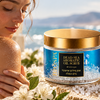
Where Do Dead Sea Minerals Fit Into an Anti-Ageing Routine?
Dead Sea minerals don't need to compete with peptides or retinol. They play a different role in the skincare conversation. Dead Sea mineral skincare can be incorporated into:
- Cleansers
- Moisturisers
- Serums
- Masks
- Eye creams
- Body care
In an anti-ageing routine, mineral skincare can complement targeted active ingredients by supporting the cleansing, hydration, and moisturising side of the routine.
That's particularly useful when you're using stronger actives. Anti-ageing skincare isn't just about stimulating your skin. It's also about looking after it.
A Simple Peptide Anti-Ageing Routine
If you prefer a gentle approach:
Morning: Gentle cleanser → peptide serum → moisturiser → broad-spectrum sunscreen
Evening: Cleanser → peptide serum → nourishing moisturiser
Simple. Comfortable. Easy to maintain.
A Simple Retinol Anti-Ageing Routine
If visible signs of photoageing are your priority:
Morning:
Gentle cleanser → hydrating or antioxidant serum if desired → moisturiser → broad-spectrum sunscreen
Evening:
Gentle cleanser → retinol according to product directions and tolerance → moisturiser
You don't need five other active ingredients competing for attention.
A Peptide + Retinol Routine
Want both? Try keeping it simple:
Morning: Cleanser → peptide serum → moisturiser → sunscreen
Evening: Cleanser → peptide serum if compatible with your products → retinol → moisturiser
Or separate them if your skin prefers fewer layers. The best routine is the one your skin tolerates consistently.
Peptides vs Retinol: Which Should You Choose?
Here's the easiest way to decide.
Choose peptides if:

- You want a gentler anti-ageing routine
- Your skin is easily irritated
- Hydration and firmness are priorities
- You're new to active skincare
- You want something easy to incorporate into an existing routine
- You haven't tolerated retinol well
Choose retinol if:

- Fine lines and wrinkles are your main concern
- You want an ingredient with stronger evidence for photoageing
- Uneven texture is bothering you
- Uneven pigmentation is part of your concern
- Your skin can tolerate retinoids
- You're willing to introduce it gradually
Consider both if:
- You want a comprehensive anti-ageing routine
- Your skin tolerates retinol
- You want targeted retinoid treatment alongside supportive peptide skincare
And regardless of which option you choose:
use sunscreen.
Frequently Asked Questions: Peptides vs Retinol
Are peptides better than retinol?
Not necessarily. Retinoids have stronger evidence for treating visible photoageing, while peptides may offer a gentler way to support hydration and the appearance of firmness and wrinkles. The better choice depends on your skin and goals.
Is retinol better than peptides for wrinkles?
Retinoids have a considerably stronger clinical evidence base for photoageing and wrinkles. Peptide research is promising, but evidence varies according to the peptide and formulation.
Can I use peptides and retinol together?
Generally, yes. Peptides and retinol can potentially be used within the same skincare routine. Introduce products gradually and follow their individual directions.
Should I use peptides before or after retinol?
This depends on the formulations. Lightweight serums are generally applied before richer products, but follow the directions supplied with each product rather than relying on a universal layering rule.
Are peptides good for mature skin?
Peptides can be useful ingredients in mature-skin formulas designed to support hydration and the appearance of firmness, smoothness and fine lines.
Are peptides suitable for sensitive skin?
Peptide products are often well tolerated, but suitability depends on the complete formulation. Patch test if you're sensitive and introduce new products gradually.
Does retinol make your skin thinner?
This is a common misconception. Retinoids are associated with remodelling of photoaged skin rather than simply "thinning" it; research has documented changes in both epidermal and dermal structures. However, irritation and peeling can occur, especially when retinoids are introduced too aggressively.
Can I use peptide serum every day?
Many peptide serums are designed for daily use, but always follow the directions for your particular formulation.
Which is better for beginners: peptides or retinol?
Peptides are generally the easier introduction because they tend to be gentler. Retinol can also be used by beginners, but it should be introduced carefully according to the product directions and your skin's tolerance.
Do I still need moisturiser if I use peptides or retinol?
Usually, yes. A targeted serum isn't necessarily a replacement for moisturiser. Moisturising is particularly important when using retinol because dryness and irritation can occur.
Peptides or Retinol? Maybe We’re Asking the Wrong Question
Skincare loves a competition.
Retinol vs peptides.
Vitamin C vs niacinamide.
Hyaluronic acid vs everything else.
But your skin doesn't care which ingredient wins the internet debate.
Retinol and peptides do different things, and the evidence behind them isn't identical.
If you want the more extensively researched option for visible photoageing, retinoids have the advantage.
If you want a gentler ingredient that fits easily into a hydration and anti-ageing routine, peptides are worth considering.
And if your skin tolerates both?
You don't necessarily have to pick a side.
Build your routine around what your skin actually needs, introduce stronger ingredients gradually, moisturise properly and protect your skin from the sun.
Because the best anti-ageing routine isn't the one containing the trendiest ingredient.
It's the one you can use consistently while keeping your skin healthy, comfortable and protected.